


Published: August 28, 2026 | Updated: August 31, 2026
What Is A Caster Wheel? Complete Guide
Direct Answer
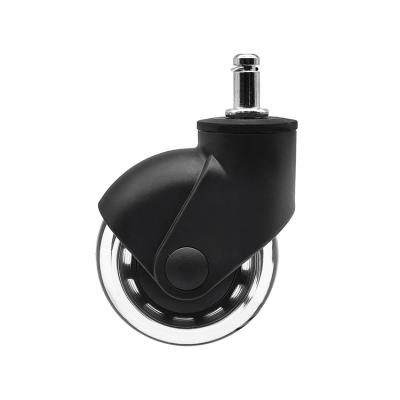
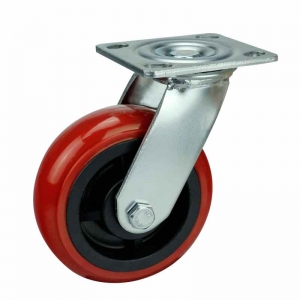
A caster wheel is a wheel-and-mounting assembly that lets equipment roll, steer or both. The complete caster normally includes a wheel, axle, bearings, fork or rig, mounting plate or stem, and sometimes a swivel race, brake or directional lock. A rigid caster rolls in one direction; a swivel caster rotates around a vertical axis so a cart can change direction. The correct caster is selected from total moving weight, load distribution, wheel diameter, tread material, floor, obstacles, speed, duty cycle, temperature, chemicals, noise, mounting geometry and braking needs. A wheel by itself is therefore only one component of a caster.
Quick Reference Data Table
| Caster component | Primary function | Selection question |
|---|---|---|
| Wheel tread | Contacts the floor and affects grip, noise, wear and floor protection. | Does the floor require PU, rubber/TPR, nylon, cast iron or another material? |
| Wheel core | Supports the tread and transfers load to the hub. | Is the core strong and chemically compatible for the duty? |
| Hub and bearing | Allows the wheel to rotate around the axle. | What load, speed, maintenance and push-force target apply? |
| Fork or rig | Holds the wheel and transfers load to the equipment. | Can it withstand vertical load, side load and impact? |
| Swivel race | Lets a swivel caster rotate around a vertical axis. | Is easy maneuvering or straight tracking more important? |
| Mounting | Connects the caster by plate, stem, bolt hole or socket. | Do the dimensions and frame strength match the drawing? |
| Brake or lock | Restricts wheel rotation, swivel rotation or both. | Is parking, total locking or directional control required? |
| Fasteners | Keep the load path connected to the frame. | Are bolt grade, torque and inspection requirements defined? |
Caster Wheel Meaning: Wheel Versus Complete Caster
In everyday purchasing language, “caster wheel” may mean either the wheel alone or the complete caster. Engineers should separate those meanings. A replacement wheel needs diameter, tread width, hub length, bore, bearing and axle information. A complete caster additionally needs mounting dimensions, overall height, fork width, offset, swivel radius, bracket finish, brake and rated capacity. Many quotation errors begin when buyer and supplier use the same word for different assemblies.
The caster creates a controlled interface between equipment and the floor. It must carry static weight while parked, tolerate dynamic load during travel and translate human or powered input into rolling and steering. Its performance is not determined by one headline number. The wheel, bearing, axle, fork, swivel section, mounting hardware and equipment frame act as one load path, so the weakest element or connection can govern the result.
A rigid caster has a fixed fork orientation. It rolls forward and backward and helps a cart track. A swivel caster has a vertical swivel axis offset from the wheel contact patch. That offset makes the caster trail behind the pivot when the cart moves, allowing the wheel to align with the direction of travel. Four swivel casters turn tightly, while two swivel plus two rigid casters often provide better control in long aisles.
Brakes also require precise language. A wheel brake mainly restricts wheel rotation. A swivel lock fixes the caster’s heading. A total-lock design is intended to restrict both wheel and swivel movement. Mechanisms and holding performance vary, so the purchase specification should name the required function rather than relying on a generic phrase such as “with brake.”
How to Choose the Correct Caster Wheel
Start with maximum operating mass: equipment, payload, batteries, tools, fluids and attachments. For a four-caster cart on uneven floors, divide the total by three rather than four as an initial load-sharing check, because one wheel may temporarily lose contact. Then add an application-appropriate allowance for shock, speed, ramps and load transfer. This calculation is a screening method, not a substitute for the manufacturer’s model-specific rating.
Choose wheel diameter from more than available height. Larger wheels generally cross joints, debris and thresholds with less force, which can reduce operator effort and vibration. Tread width spreads contact pressure but may increase scrub when turning. Measure the worst floor joint, gap, cable cover, ramp and debris condition instead of describing the floor only as “concrete” or “tile.”
Select tread material from the whole environment. Polyurethane can balance capacity, wear, rolling efficiency and floor protection. Rubber or TPR can reduce noise and absorb small shocks. Nylon can roll efficiently and resist many substances but may be louder and harder on floors. Cast iron or steel can handle demanding conditions where noise and floor marking are acceptable. Formulation and hardness matter; color alone does not identify performance.
Finish with interfaces and validation. Confirm plate length and width, bolt-hole spacing, hole diameter, stem size, overall height, swivel radius and brake clearance. State speed, travel distance, starts, turns, washdown, temperature and chemical exposure. Approve a drawing and sample, record the model and revision, and require change control so repeat shipments match the tested configuration.
Common Applications and Buying Errors
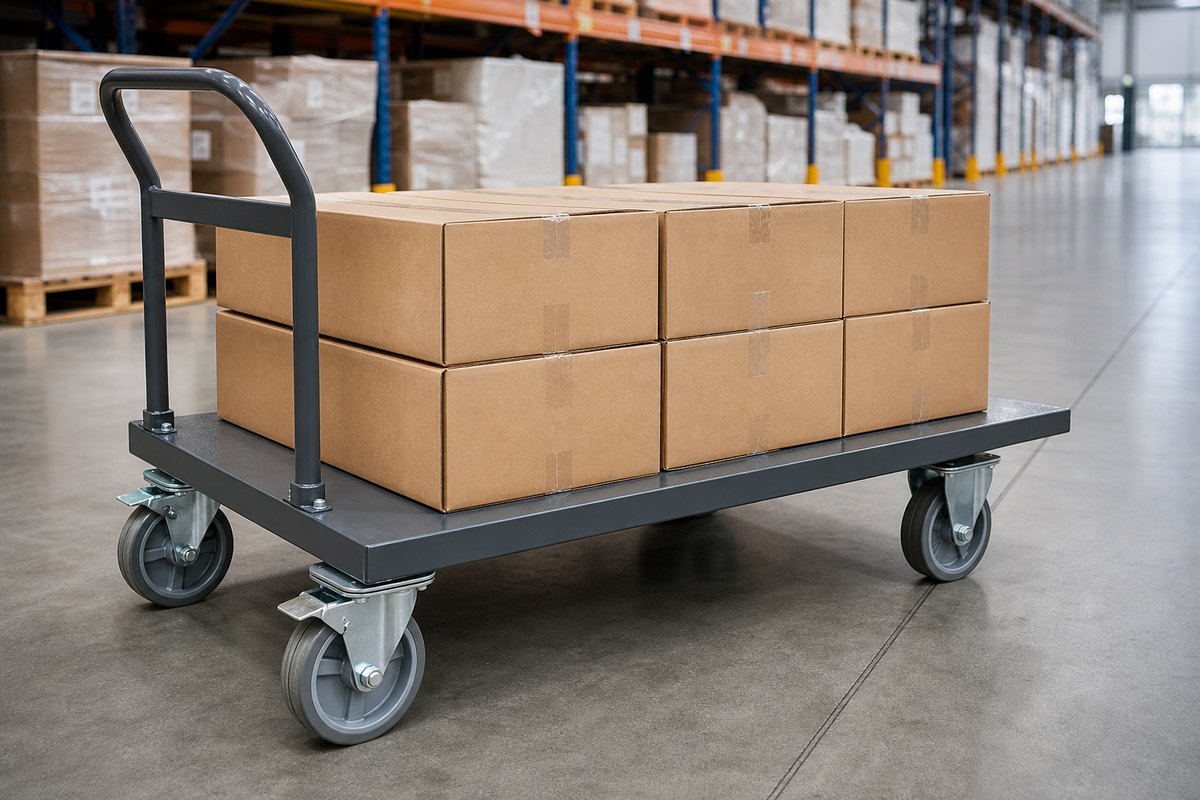
Caster wheels are used on warehouse trolleys, medical beds, food-processing equipment, workstations, racks, flight cases, dollies, waste bins, scaffolds and OEM machinery. The same visual shape can serve very different duties. A quiet hospital caster, a washable stainless food caster and a shock-resistant tow-line caster may share a diameter but differ in materials, bearings, seals, brakes, geometry and test requirements.
The most common error is buying by capacity and diameter only. Other frequent failures include using a soft wheel that develops excessive rolling resistance, installing a hard wheel on a delicate floor, selecting four swivel casters for a long narrow route without directional control, ignoring heat near ovens, using an unsealed bearing in washdown, and mounting a strong caster to a weak or distorted frame corner.
Practical Case: Replacing Casters on a 480 kg Library and Sample Cart
A mobile sample cart weighs 180 kg and carries up to 300 kg, producing a maximum operating mass of 480 kg. It uses four casters on indoor level floors but crosses elevator gaps. Dividing by three gives 160 kg per caster before additional allowance. The buyer therefore evaluates casters comfortably above that value under the supplier’s stated dynamic test conditions rather than selecting a nominal 120 kg model from a four-way division.
Operators need low noise, floor protection and controlled tracking. The team compares larger polyurethane and elastic-rubber wheels, measures the elevator gap, and tests starting force with the maximum load. Two swivel casters and two rigid casters are selected for long corridors, with wheel brakes at the parking end. Plate dimensions and bolt strength are checked against the cart frame, and the trial records push force, noise, braking and fastener loosening.
The result is not merely a “better wheel.” The successful solution aligns capacity, geometry, tread, bearing, layout and operating route. The approved drawing, sample and acceptance checklist become purchasing assets for future carts and replacement orders.
Engineer Experience
An engineer first asks what the equipment does, where it moves and who moves it. A caster that carries the load but creates excessive starting force, unstable steering or floor damage has failed the business requirement. Define acceptable push force, noise, vibration, tracking and service interval alongside capacity.
Inspect the mounting surface before blaming a caster. A twisted frame, uneven plates, loose bolts or mismatched caster heights can overload one corner and cause shimmy. Install on flat, rigid interfaces, torque fasteners consistently and recheck after the first operating cycles.
For replacement work, record more than wheel diameter. Photograph the complete caster, measure overall height, plate and hole pattern, wheel width, hub length, axle and swivel envelope, then identify the brake function. A dimensioned sketch prevents samples that look correct but do not fit.
Factory Testing and Quality Context
YLCASTER was established in 1997. Its 2025 company profile reports a 40,000 m² manufacturing facility, about 200 employees and more than 2,000 caster items across the portfolio, with company-level load coverage stated from 10 kg to 30 tons. The profile also lists CE, RoHS and ISO 9001 credentials. Buyers should still verify which certificates, standards and reports apply to the exact model and destination.
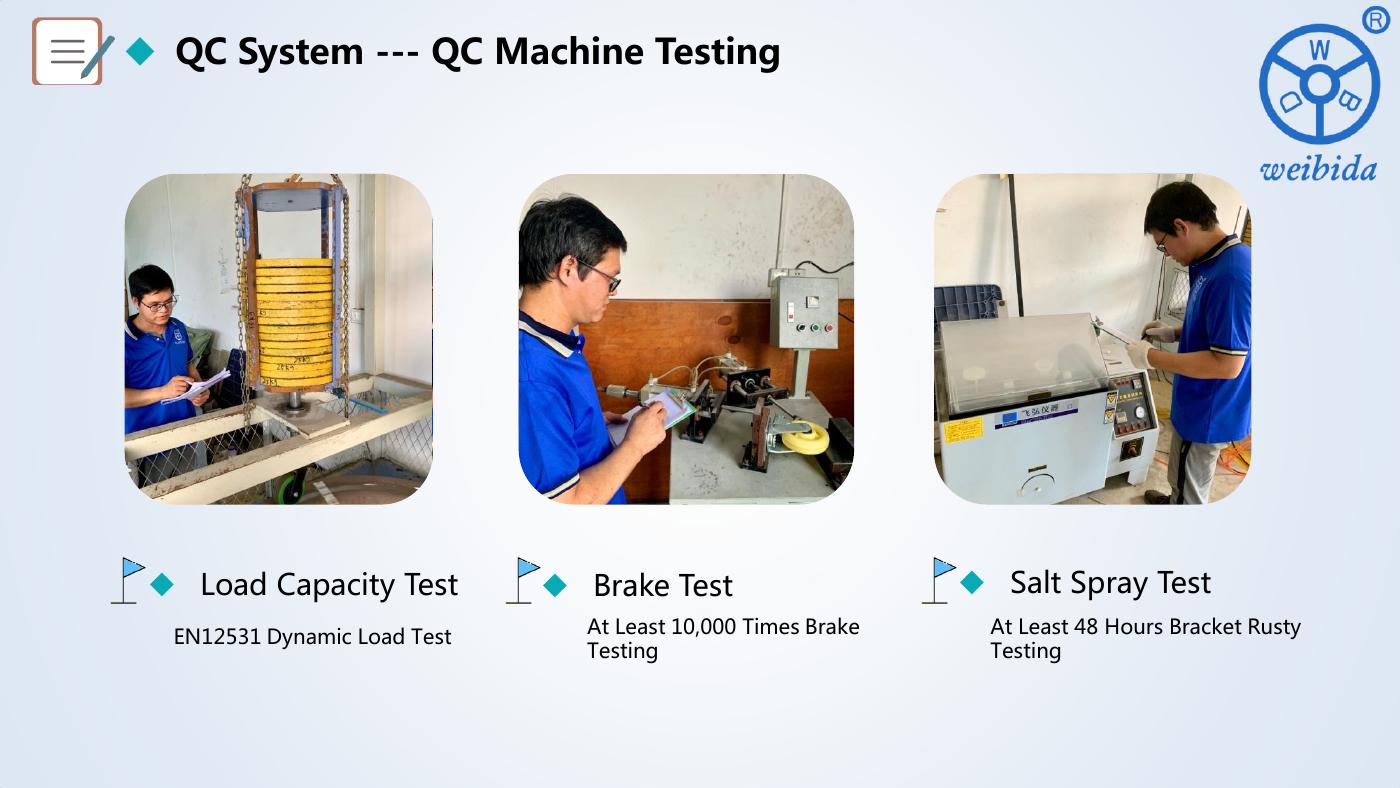
Quality validation should reproduce the intended risk. YLCASTER materials describe EN 12531 dynamic-load testing, brake testing of at least 10,000 cycles and salt-spray testing of at least 48 hours as factory capabilities. For an RFQ, ask which test was performed on the offered construction, at what load, speed and obstacle condition, and request an agreed report when the application is safety- or uptime-critical.
International Purchasing Notes
International buyers should separate technical approval from commercial approval. First freeze the model, drawing revision, materials, hardness, bearing, finish, brake, rating basis, test scope and sample. Then compare MOQ, lead time, Incoterm, carton quantity, pallet dimensions, gross weight, spare parts and warranty process. This prevents a cheaper quotation from quietly changing the approved caster.
For projects in Germany and wider Europe, documentation and controlled specifications may be especially important; Brazil, Colombia and Peru can require strong export packing and clear labeling; Korea often values precise drawings and finish consistency; Saudi Arabia and Kenya can add heat, dust and storage concerns; Russia can add climate and logistics considerations. The importer must confirm current local legal, conformity and customs requirements.
FAQ
What is the difference between a wheel and a caster?
A wheel rotates around an axle. A caster is the complete mounting assembly, normally including the wheel, axle, fork or rig, mounting and—on swivel models—the swivel section.
Why are caster wheels offset from the swivel center?
The offset creates a trailing action. As the cart moves, floor force helps the wheel align behind the vertical swivel axis, allowing the caster to change direction.
How is caster load capacity calculated?
Add maximum equipment and payload mass. For four casters, dividing by three is a common uneven-load screening method, by allowances for shock, speed, floor and duty.
Which caster wheel material is best?
There is no universal best material. PU, rubber/TPR, nylon, cast iron and other treads solve different capacity, noise, floor, heat and chemical requirements.
Do larger caster wheels roll more easily?
Generally, larger diameters reduce the force required to cross obstacles and often improve rolling, but bearing, tread, load and floor also affect effort.
What does a caster brake do?
Depending on design, it can restrict wheel rotation, swivel rotation or both. Confirm the exact function and holding requirement before ordering.
Can I replace only the caster wheel?
Yes when the fork, swivel and mounting remain serviceable and the replacement matches diameter, width, hub, bore, bearing, axle and load requirements.
What information should a caster RFQ include?
Provide maximum load, caster quantity and layout, speed, route, floor obstacles, environment, dimensions, mounting, brake, desired life, quantity and required tests.
Recommended Products
- YLCASTER industrial caster range: Compare caster families, materials and mounting options for different applications.
- American heavy-duty casters: Review welded industrial caster options for higher-load projects.
- Medical casters: Explore purpose-specific casters where mobility, noise and braking matter.
Related Articles
- Casters For Warehouse Trolleys
- How Casters Are Tested
- Heavy Duty Caster Buying Guide
- OEM Caster Manufacturer Guide
Request a Quote
Technical note: company-level factory figures describe YLCASTER’s overall portfolio, not every individual model. Confirm the selected caster drawing, test conditions, rated capacity and compliance requirements before purchase.