
How Casters Are Tested
Jul 31 , 2026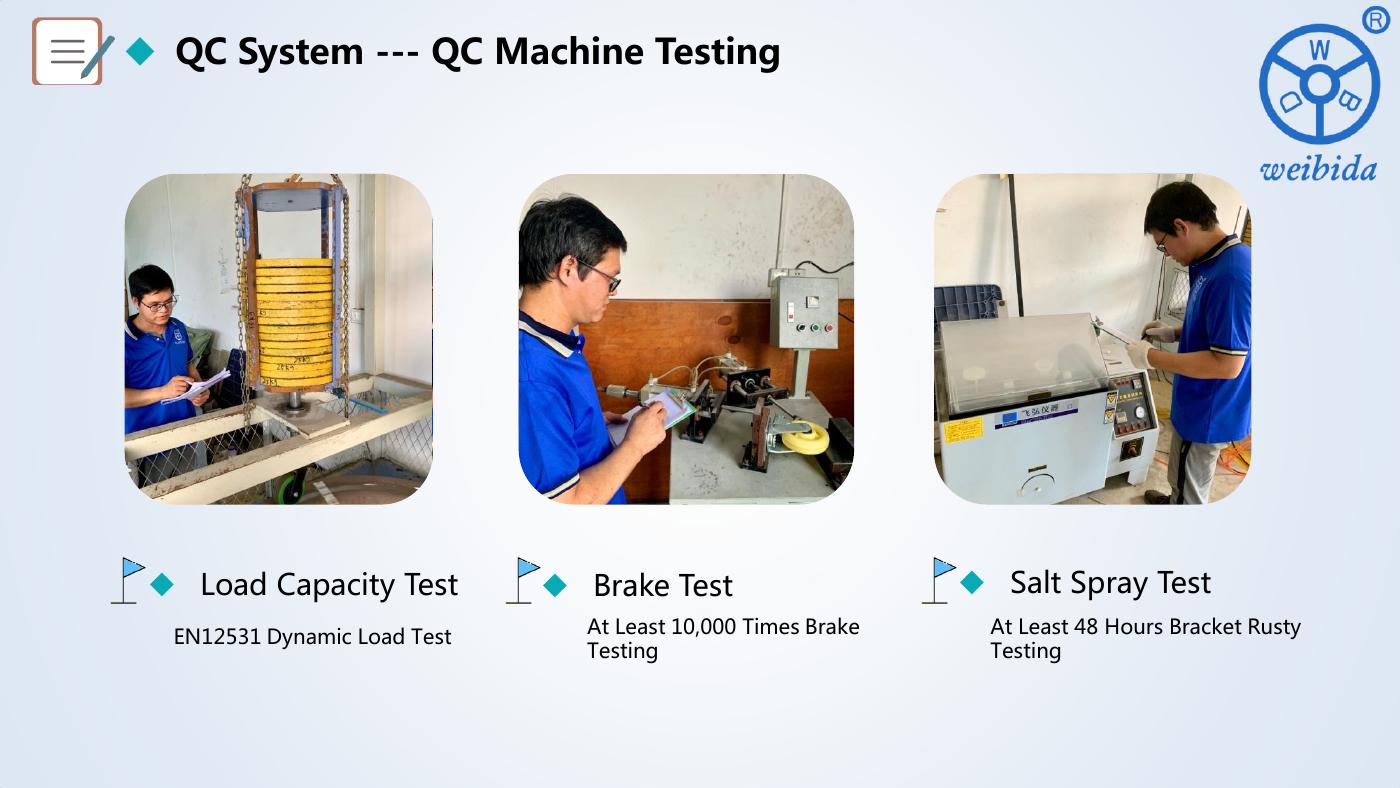
Casters are tested by applying controlled loads and operating conditions that represent their intended use. A robust program can include dimensional inspection, static load, dynamic endurance on a drum or track, obstacle crossing, swivel and rolling resistance, brake cycling, impact, corrosion exposure, temperature and chemical compatibility. The rating is meaningful only when the exact model, mounting, load, speed, test duration, obstacle, environment and acceptance criteria are stated. YLCASTER's 2025 materials list EN12531 dynamic load testing, load-capacity testing, at least 10,000 brake operations and at least 48 hours of salt-spray testing as factory QC capabilities.
| Test | Typical purpose | Report should identify |
|---|---|---|
| Dimensions | Confirm fit and interchangeability | Drawing revision, sample size, tools and results. |
| Static load | Check deformation or structural failure under held load | Applied load, time, mounting and residual deformation. |
| Dynamic/endurance | Assess rolling durability under repeated travel | Load, speed, distance/cycles, obstacle and failure criteria. |
| Brake cycling | Assess repeated lock/release function | Cycle count, load, actuation method and holding result. |
| Salt spray | Compare corrosion performance of finishes | Method, hours, evaluation area and acceptance level. |
| Rolling/swivel force | Measure operator or towing effort | Floor/drum, load, speed, start and steady force. |
| Application test | Verify the complete cart or equipment | Real frame, floor, load distribution and use sequence. |
A test plan should begin with the failure risks of the application. Warehouse carts may prioritize endurance, joints and push force; hospital equipment adds noise, braking and cleaning; food machinery adds corrosion, washdown and temperature. Selecting every possible test wastes time, while selecting only a static load test misses common field failures. Link each test to a stated risk and acceptance decision.
Sample identity is essential. Record model code, drawing revision, wheel batch, bracket finish, bearing, brake and production date. Photograph the sample before testing and mark it so results cannot be reassigned. If different variants share components, explain why one result applies to another. Without configuration control, a technically good test report can still support the wrong product.
Measurement quality matters as much as machine appearance. Loads, force gauges, speed, time, distance and temperature should be measured with suitable calibrated equipment. The report should note calibration status and uncertainty where relevant. Video and photographs help explain setup, but they do not replace numerical conditions and acceptance criteria.
After testing, inspect systematically. Measure residual dimensions, wheel diameter loss, swivel play and brake condition where applicable. Note heat, noise, tread cracking, chunking, flat spots, bearing roughness, loose hardware and corrosion. A failed test is useful when the failure mode is documented and drives a controlled design change by retesting.
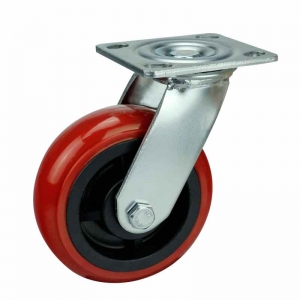
A buyer wants to qualify a 125 mm polyurethane caster for a manually pushed equipment cart. The supplier drawing is checked first: wheel diameter and width, overall height, offset, plate size, bolt holes, bearing, tread, brake and model code. Five samples are identified so test results cannot be mixed between variants.
The team measures dimensions, mounts the caster using the specified fasteners and performs a static load hold with defined residual-deformation criteria. Dynamic endurance follows at the agreed load, speed and obstacle condition. Brake samples are cycled and then checked for release, wheel lock and swivel lock. A finish sample enters corrosion testing under the agreed method. The assembled cart is finally pushed across its actual floor joints because a laboratory pass does not prove acceptable steering or noise.
The report records setup photos, calibration status, sample IDs, loads, duration, observations and pass/fail criteria. If a wheel compound, bearing or bracket changes, the buyer's change-control matrix decides which tests must be repeated. This traceable structure is more useful than a certificate showing only the word 'passed.'
Test the exact configuration sold. Swivel, rigid and brake versions may share a wheel yet place different stress on forks, races and pedals. Do not use a result from one variant as blanket proof without engineering justification.
Ratings from different suppliers are not always directly comparable. Ask about speed, obstacle, test surface, duration and allowable wear. A higher number under an easier method may be less conservative than a lower number under a demanding method.
Salt-spray hours do not predict exact outdoor service life. The test is useful for controlled comparison of finishes, but real corrosion depends on scratches, drainage, chemicals, temperature, maintenance and galvanic combinations.
Failure analysis matters. Tread chunking, permanent set, bearing temperature, loose fasteners, brake drag and swivel play indicate different corrective actions. Keep observations, not just a final pass/fail box.
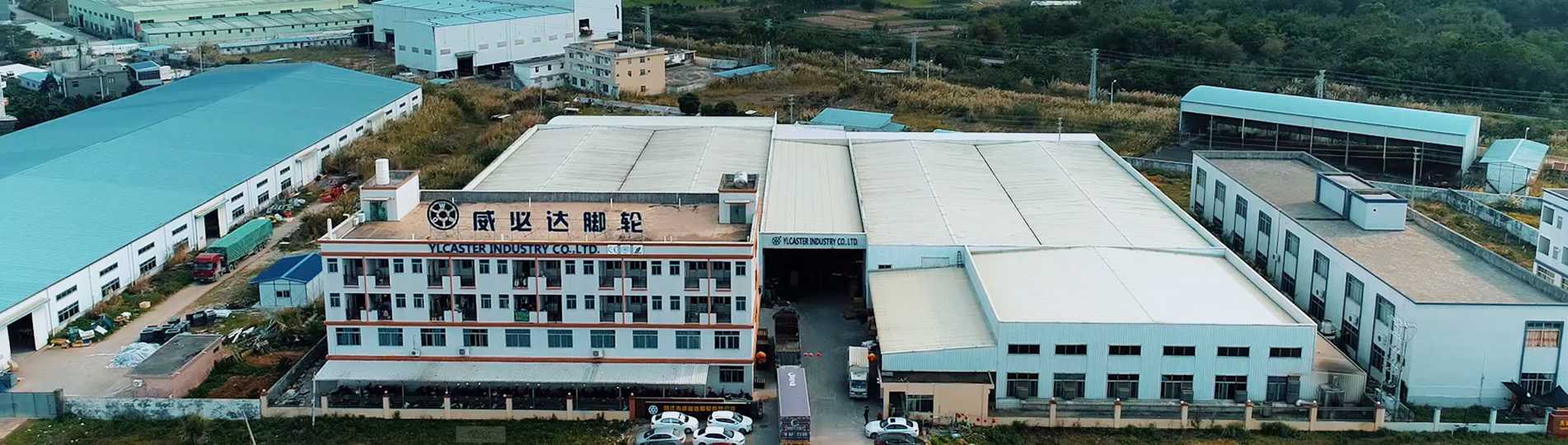
YLCASTER was established in 1997. The 2025 company profile reports a 40,000 m² plant, about 200 employees, more than 2,000 caster items, and an available load-capacity range from 10 kg to 30 tons across the full portfolio. The same source lists CE, RoHS and ISO 9001 credentials. These company-level figures describe the portfolio and factory; they are not a rating for every individual caster.
Factory materials show load-capacity, brake and corrosion testing resources. The exact test report, rating and acceptance criteria must be requested for the selected model; company capability statements are not substitutes for a model-specific result.
For how casters are tested, international buyers should separate technical approval from commercial approval. First freeze the model, drawing revision, materials, rating basis, test scope and sample. Then compare MOQ, lead time, Incoterm, carton quantity, pallet dimensions, gross weight, spare parts and warranty process. This prevents a shipping or packaging change from quietly altering the approved caster. Ask the supplier to list every deviation from the RFQ instead of hiding alternatives in a general quotation.
Projects for Germany and wider Europe may emphasize documentation, controlled specifications and corrosion performance; buyers in Brazil, Colombia and Peru may also need robust export packing and clear Portuguese or Spanish labeling; Korea may require precise drawings and consistent finish; Saudi Arabia and Kenya can add heat, dust, storage and route concerns; Russia may require climate and logistics review. These are planning prompts, not legal conclusions. The importer must confirm current local regulations, language, conformity and customs requirements for the final equipment.
Before shipment, approve label content and photograph the packed pilot carton. Link carton labels to the model and purchase order, and request final inspection evidence appropriate to the risk. On receipt, check identity, dimensions, visible damage, wheel rotation, swivel and brake function before releasing the lot to production. Early feedback with model and lot details helps the supplier investigate quickly and protects repeat-order consistency.
The caster rolls under a specified load for a defined distance or number of cycles, often with controlled speed and obstacles. The report must state all conditions and acceptance criteria.
EN 12531 is associated with castors and wheels for manually propelled institutional applications. Confirm the current applicable standard, scope and exact test claim for the product and target market.
The brake is repeatedly applied and released under a defined method, then inspected for function, wear and holding behavior. YLCASTER's company material states at least 10,000 brake test operations.
It provides a controlled corrosion comparison under the specified method and evaluation. It does not equal a guaranteed number of years in outdoor service.
Through design analysis and validation tests on the exact caster configuration. Capacity should state whether it is static or dynamic and under what speed, surface and duty conditions.
Yes when performance depends on frame stiffness, caster layout, load distribution, brakes, steering and floor interaction. Component testing and equipment testing answer different questions.
That depends on risk, standard, customer requirement and production variability. Define sample quantity and selection method before testing; one handpicked sample is weak evidence for mass production.
After relevant design, material, supplier, tooling or process changes; after significant failures; and at intervals defined by the quality plan or applicable standard.
Image note: the article cover is an application visualization created for YLCASTER. Product specifications and factory statements are based on the YLCASTER 2025 catalog and company profile. Confirm the final product model and test report before purchase.