
Casters For Warehouse Trolleys
Jul 31 , 2026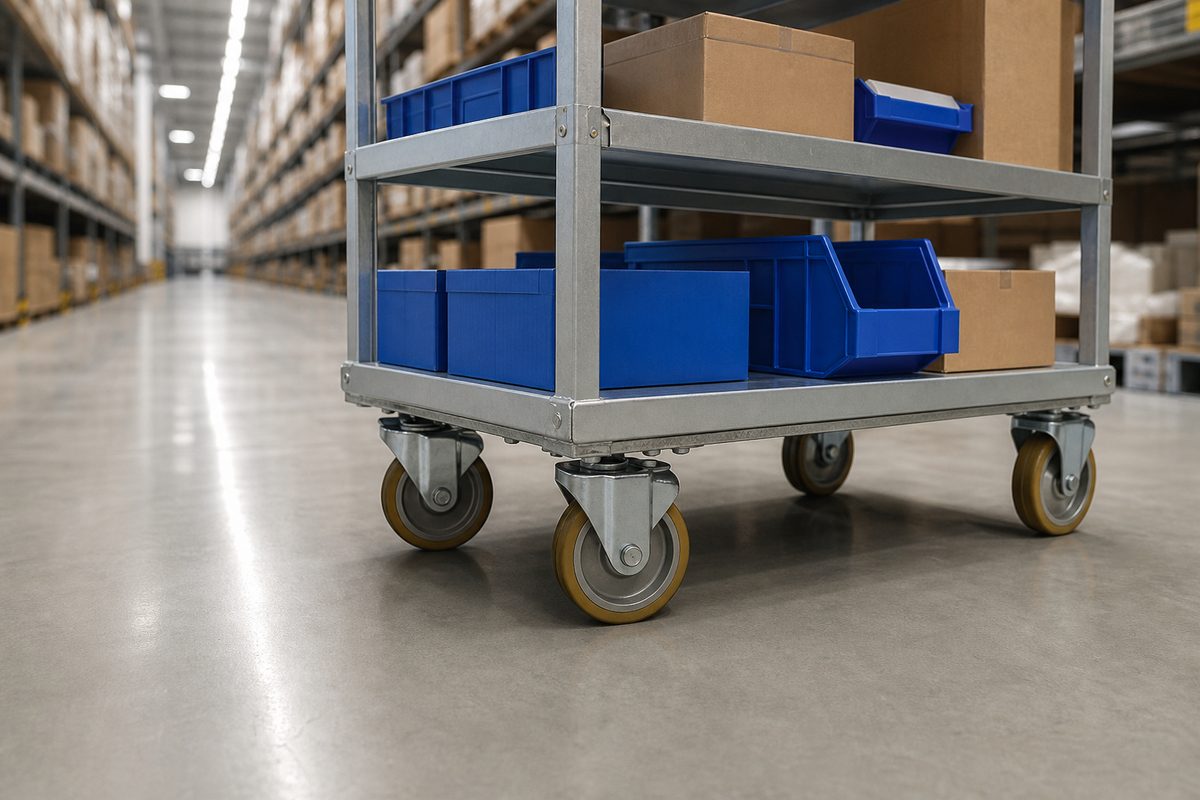
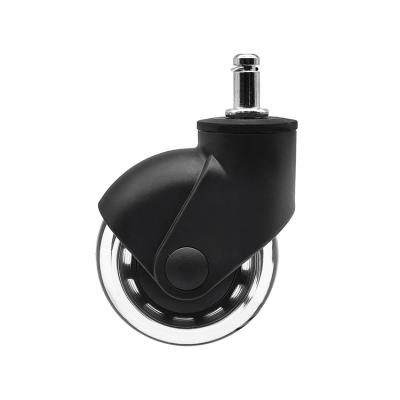
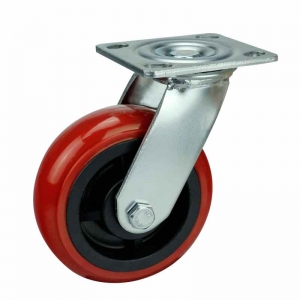
Casters for warehouse trolleys should be selected from the real maximum cart weight, floor condition, travel distance, operating speed and required maneuverability. For smooth indoor epoxy or concrete floors, polyurethane wheels are a common starting point because they combine rolling efficiency, wear resistance and floor protection. TPR or elastic rubber may be preferred when noise and vibration matter more; nylon or cast iron can suit harder industrial duty when floor marking and impact are controlled. Calculate the minimum rating per caster with a safety factor and assume only three of four casters may share the load on an uneven floor.
| Selection factor | Engineering question | Practical direction |
|---|---|---|
| Total moving load | Cart + payload + fixtures? | Use the maximum credible operating load, not average load. |
| Load per caster | Will four wheels always touch? | For a four-caster cart, divide by three, then apply an application safety factor. |
| Floor | Smooth epoxy, joints, debris or ramps? | PU for balanced indoor duty; TPR/rubber for quieter travel; larger diameter for joints. |
| Wheel diameter | How much push force and obstacle crossing? | Larger wheels generally roll more easily and bridge floor gaps better. |
| Layout | Two swivel + two rigid, or four swivel? | Two-and-two tracks well; four swivel turns tightly but needs directional control. |
| Brake | Parking only or operator control on slopes? | Specify wheel brake, total lock or directional lock by risk assessment. |
| Speed | Manual walking speed or powered tow? | YLCASTER catalog guidance uses below 4 km/h for normal intermittent manual use. |
Warehouse duty is a system problem. Start by mapping the route from loading point to destination: aisle length, turns, lifts, thresholds, ramps, dock plates and damaged concrete. Record the worst obstacle rather than describing the floor as simply 'smooth.' A trolley that feels easy in a sample room may require much more force after hundreds of meters, tight turns and debris exposure. If powered towing is possible, state it explicitly because speed and heat can invalidate a manual-use selection.
Wheel material should be compared on the actual floor. Polyurethane hardness and formulation affect rolling resistance, chunking, noise and marking; the word PU does not identify one performance level. TPR and rubber can absorb vibration but may increase starting force under high load. Hard nylon, cast iron or steel can roll efficiently, yet concentrate stress on joints and coatings. Ask for samples and run a loaded route trial with consistent measurement.
Caster geometry affects behavior even when wheels match. Offset creates the lever that makes a swivel caster align, but it also controls swivel radius and flutter tendency. Bearing selection influences effort and maintenance. Plate thickness and fork clearance affect shock strength. Compare controlled drawings, not just photographs, and make sure the trolley frame leaves clearance for full swivel and brake operation.
A useful acceptance plan includes dimensional inspection, loaded starting and sustained push force, straight-line tracking, turning within the intended aisle, brake holding, threshold crossing, floor marking and post-test inspection. Record load, floor, tire condition and operator method so results can be repeated. For large orders, retain the approved sample and define which material or process changes require customer notification.
A purchasing team needs a 900 × 600 mm platform trolley for cartons and components. The cart weighs 45 kg and the stated payload is 455 kg, so the maximum moving mass is 500 kg. On a four-caster frame, a conservative three-point load-sharing calculation gives 500 ÷ 3 = 166.7 kg per caster before an application safety factor. The team therefore should not select a 125 kg caster simply because four times 125 equals 500; that assumes a perfectly level floor and equal loading.
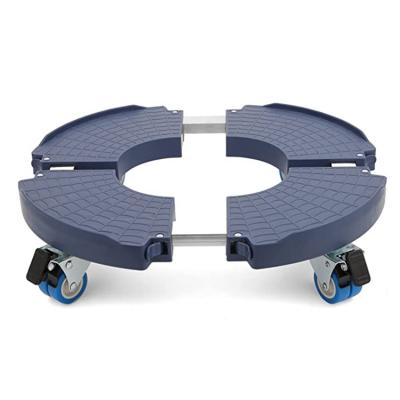
The floor is sealed concrete with expansion joints, the trolley is manually pushed, and operators value lower noise. A 125–200 mm polyurethane or elastic-rubber wheel with suitable bearings is a rational shortlist, subject to the exact product rating, starting-force target and joint height. The catalog's T001 platform-trolley section gives relevant reference configurations: a 900 × 600 mm plastic platform trolley is listed at 400 kg, while larger trolley variants are listed up to 500 kg. Those complete-trolley ratings should not be transferred to a different frame without checking its caster model and structure.
The final RFQ should include total mass, wheel diameter, tread material, plate dimensions, bolt-hole spacing, overall height, required brake arrangement, floor photos and expected daily travel. This turns a vague request for 'heavy wheels' into a specification a caster engineer can verify.
Start with push effort, not only static capacity. A wheel can support the load yet make the trolley exhausting to start or steer. Soft tread reduces noise but increases deformation; hard tread rolls efficiently but transmits more shock. The correct compromise depends on aisle distance, floor defects and operator frequency.
Check the mounting plate as part of the system. Plate size, bolt-hole spacing, fastener grade and frame stiffness must carry both vertical load and side force during turns. A high-capacity wheel fitted to a flexible corner plate will not create a high-capacity trolley.
For long aisles, two swivel and two rigid casters usually provide better directional stability. Four swivel casters improve side movement in confined areas but may wander. A directional lock can give both modes when the frame and operating procedure support it.
Inspect hair, film and strapping wrap around axles. In distribution centers, contamination around the hub can increase rolling resistance before the tread is worn out. Establish inspection intervals based on travel and debris exposure, not only calendar time.
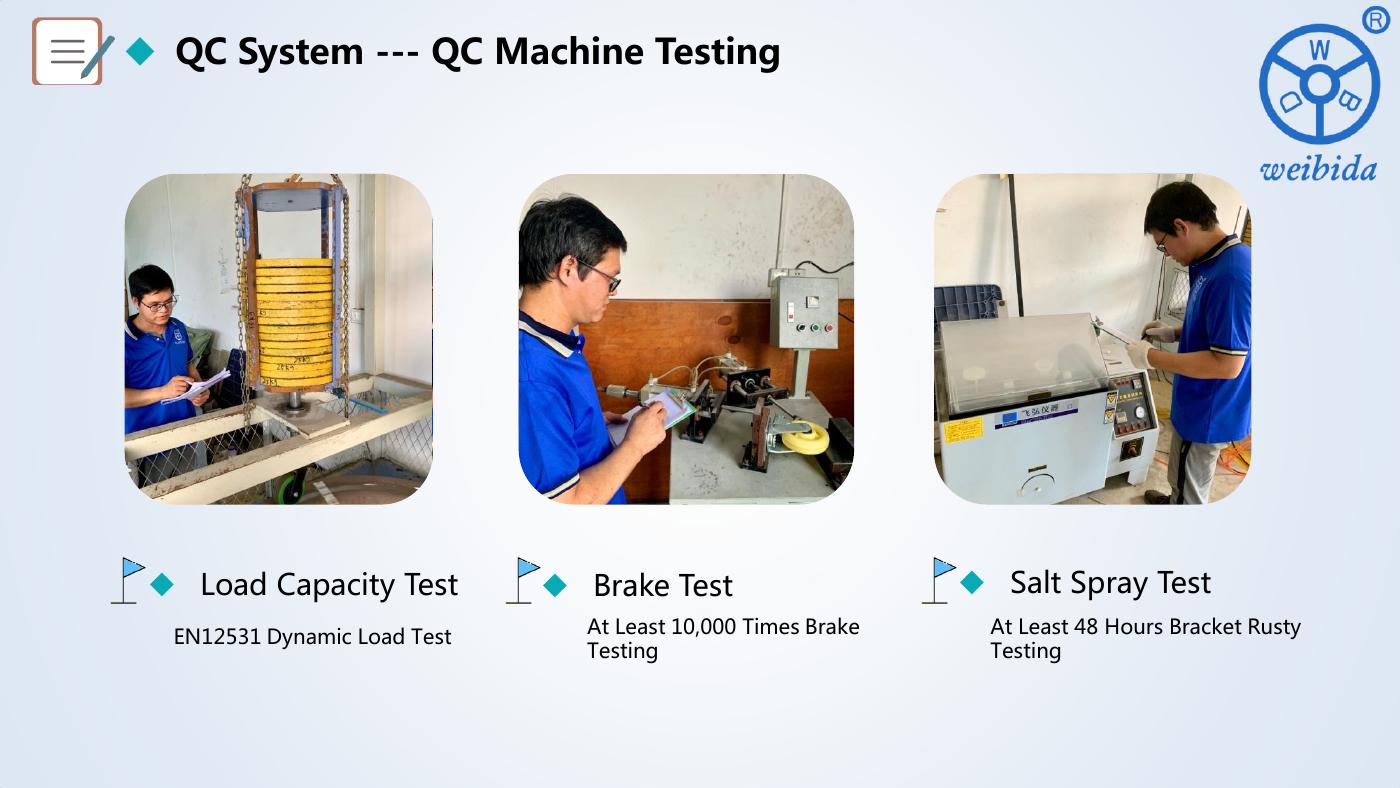
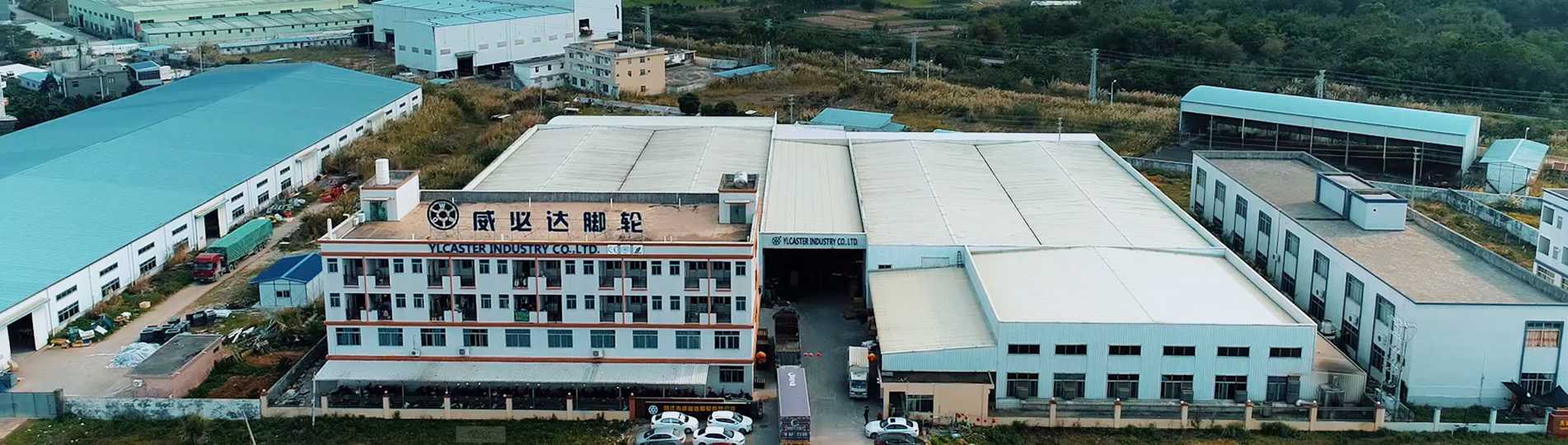
YLCASTER was established in 1997. The 2025 company profile reports a 40,000 m² plant, about 200 employees, more than 2,000 caster items, and an available load-capacity range from 10 kg to 30 tons across the full portfolio. The same source lists CE, RoHS and ISO 9001 credentials. These company-level figures describe the portfolio and factory; they are not a rating for every individual caster.
Factory materials show load-capacity, brake and corrosion testing resources. The exact test report, rating and acceptance criteria must be requested for the selected model; company capability statements are not substitutes for a model-specific result.
For casters for warehouse trolleys, international buyers should separate technical approval from commercial approval. First freeze the model, drawing revision, materials, rating basis, test scope and sample. Then compare MOQ, lead time, Incoterm, carton quantity, pallet dimensions, gross weight, spare parts and warranty process. This prevents a shipping or packaging change from quietly altering the approved caster. Ask the supplier to list every deviation from the RFQ instead of hiding alternatives in a general quotation.
Projects for Germany and wider Europe may emphasize documentation, controlled specifications and corrosion performance; buyers in Brazil, Colombia and Peru may also need robust export packing and clear Portuguese or Spanish labeling; Korea may require precise drawings and consistent finish; Saudi Arabia and Kenya can add heat, dust, storage and route concerns; Russia may require climate and logistics review. These are planning prompts, not legal conclusions. The importer must confirm current local regulations, language, conformity and customs requirements for the final equipment.
Before shipment, approve label content and photograph the packed pilot carton. Link carton labels to the model and purchase order, and request final inspection evidence appropriate to the risk. On receipt, check identity, dimensions, visible damage, wheel rotation, swivel and brake function before releasing the lot to production. Early feedback with model and lot details helps the supplier investigate quickly and protects repeat-order consistency.
There is no universal best material. Polyurethane is a strong general choice for smooth indoor concrete or epoxy because it balances durability, rolling efficiency and floor protection. TPR or elastic rubber can reduce noise; nylon or cast iron may roll efficiently under heavier duty but requires closer attention to floor damage and impact.
Yes. Excessive point loading, embedded debris, hard narrow treads, skidding brakes and damaged wheels can mark or chip epoxy. Use adequate tread width, compatible material, clean wheels and a rating that keeps contact stress within the floor system's limits.
Most rectangular trolleys use four. Six may support long frames, but center-wheel height and frame flex must be engineered so the load shares predictably. More wheels do not automatically mean equal load distribution.
Add trolley mass, maximum payload and fixed accessories. For a four-caster trolley, divide by three as a conservative uneven-floor assumption, then apply a safety factor suited to impacts, ramps, speed and duty cycle. Confirm the selected model's dynamic rating.
They can be used outdoors when the polyurethane formulation, bearings, bracket finish, temperature and exposure are suitable. Specify water, UV, chemicals, rough pavement and storage conditions; do not assume every PU caster has the same outdoor durability.
Common causes include dry or contaminated bearings, tread-floor slip, loose fasteners, brake contact and swivel-race wear. Identify the source before adding lubricant, especially in clean or food-related areas where lubricant choice is controlled.
Choose the largest practical diameter that fits the overall-height and turning-clearance envelope. Larger diameters usually reduce rolling resistance and cross joints more easily, but they can raise the platform and turning radius.
Brakes are required when the trolley must remain parked, is loaded on an incline, or a risk assessment identifies uncontrolled movement. Specify whether the brake locks the wheel, swivel, both, or provides directional control.
Image note: the article cover is an application visualization created for YLCASTER. Product specifications and factory statements are based on the YLCASTER 2025 catalog and company profile. Confirm the final product model and test report before purchase.