

Published: August 28, 2026 | Updated: August 31, 2026
Types Of Caster Wheels Explained
Direct Answer
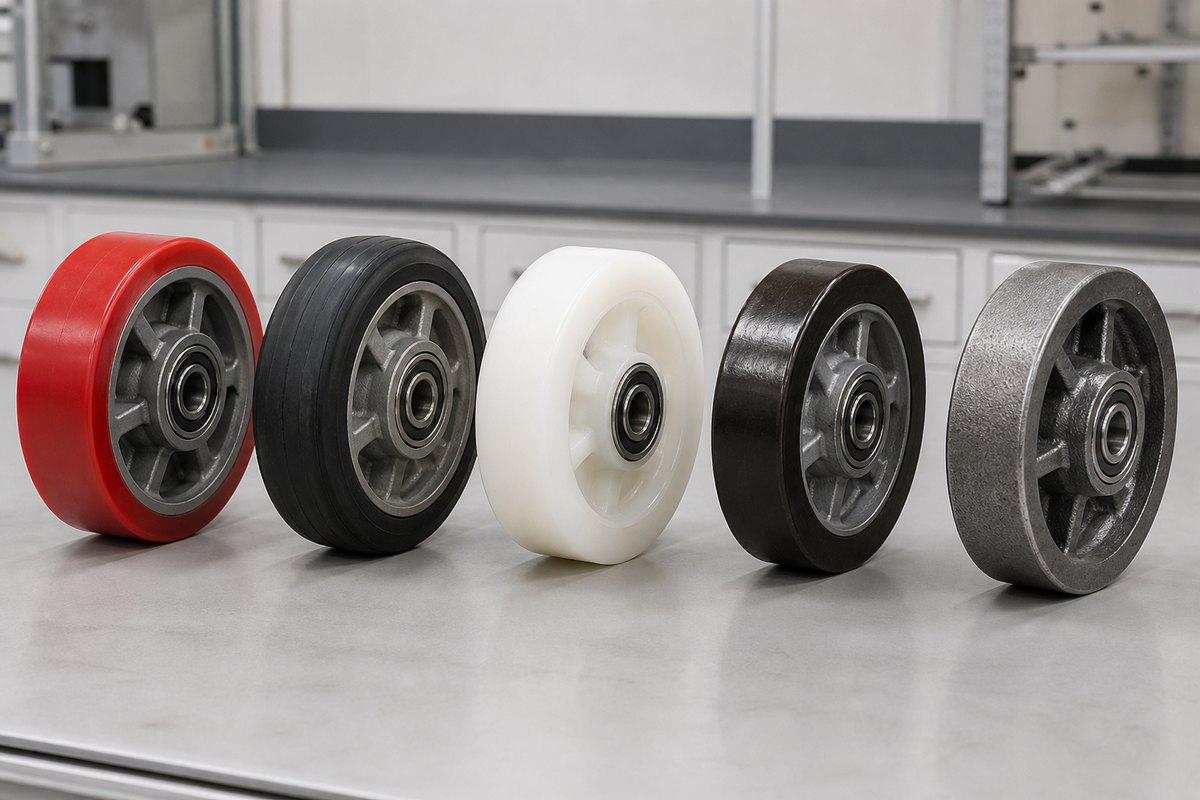
Caster wheels can be classified by movement, mounting, tread material, bearing, bracket construction, brake and duty. The main movement types are swivel casters, which steer, and rigid casters, which track in one direction. Mountings include top plate, threaded stem, grip-ring stem, expanding adapter and bolt-hole designs. Common wheel materials include polyurethane, rubber or TPR, nylon, polypropylene, phenolic, cast iron and steel. Specialized families include stainless-steel, medical, leveling, pneumatic, anti-static, high-temperature and heavy-duty casters. The best type is the one whose complete assembly matches load, speed, floor, obstacles, environment, maneuvering and maintenance—not simply the wheel color or category name.
Quick Reference Data Table
| Classification | Common types | Best used to decide |
|---|---|---|
| Movement | Swivel, rigid, swivel with directional lock | Maneuverability versus straight tracking |
| Mounting | Top plate, threaded stem, grip-ring stem, bolt hole, socket | Frame interface, installation space and service method |
| Tread | PU, rubber/TPR, nylon/PP, phenolic, iron/steel | Floor protection, noise, wear, heat and chemicals |
| Bearing | Plain bore, roller, ball, precision, sealed | Push force, speed, load, maintenance and contamination |
| Brake | Wheel brake, total lock, directional lock, central lock | Parking, steering control and operating procedure |
| Bracket | Pressed steel, welded steel, stainless steel, reinforced | Impact, corrosion, load and duty cycle |
| Special function | Leveling, pneumatic, conductive, heat-resistant, medical | Application-specific safety or process need |
| Duty family | Light, medium, heavy, super-heavy | Model-specific rating and structural margin |
Caster Types by Movement and Cart Behavior
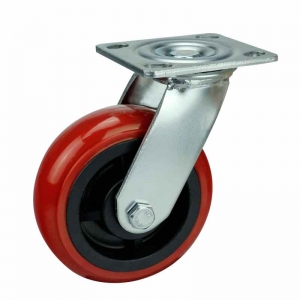
Swivel casters rotate around a vertical pivot and are chosen when equipment must turn, position or move sideways. Four-swivel layouts provide a small turning envelope, which suits work cells and crowded rooms, but they can wander in long aisles. Swivel offset, race construction, wheel diameter and load all influence steering effort and shimmy.
Rigid casters keep the wheel orientation fixed. They are efficient for straight travel and stabilize long carts. A common four-wheel arrangement uses two rigid casters and two swivel casters, creating a predictable steering end. Six-wheel rocker layouts and center-rigid configurations can help long platforms turn, but only when load sharing, frame stiffness and floor contact are engineered.
Directional locks make a swivel caster behave like a rigid caster when engaged. They are useful when the same trolley must maneuver in a loading area and track through a corridor. Total-lock casters serve a different purpose: they are intended to prevent both rolling and swiveling while parked. Terminology varies by manufacturer, so confirm the mechanism on the exact drawing.
The layout affects the whole vehicle. Handle position, center of gravity, tow direction and aisle width should be reviewed with caster type. Choosing every caster independently can produce a cart that meets component ratings but is unstable, difficult to steer or impossible to position safely.
Caster Types by Wheel Material
Polyurethane wheels are widely used because formulations can provide useful capacity, abrasion resistance and floor protection. PU can be bonded to polypropylene, aluminum, cast iron or other cores. Hardness, rebound, bond quality and temperature capability differ, so two red or blue PU wheels should not be assumed equivalent.
Rubber and thermoplastic rubber wheels can reduce noise and absorb vibration. They are common on institutional equipment, carts and applications where operator comfort matters. Softer treads may deform more under load, increasing starting force or developing flat spots during long parking. Dynamic testing at the real load is more informative than material labels alone.
Nylon and polypropylene wheels are relatively hard, easy to clean and resistant to many substances. They may roll efficiently on smooth floors but can transmit noise and impact. Phenolic wheels can suit some higher-load or temperature applications. Cast iron and steel wheels handle demanding loads and environments but may mark floors, create noise and transmit shock to equipment.
Pneumatic and semi-pneumatic wheels help on rough ground. Pneumatic tires cushion obstacles but require pressure maintenance and can puncture; semi-pneumatic designs avoid inflation but do not duplicate the same ride. High-temperature, conductive or anti-static wheels require model-specific material and resistance data, not a general family claim.
Caster Types by Mounting, Bearing and Environment
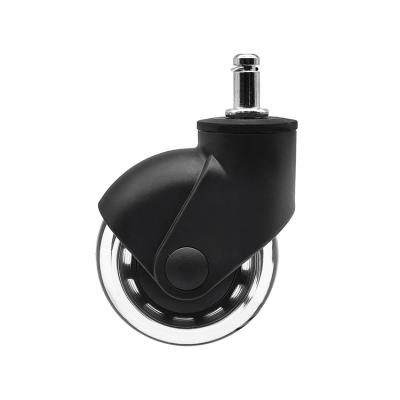
Top-plate casters distribute load through a rectangular plate and suit many industrial frames. Threaded stems install into a compatible threaded insert; grip-ring stems fit designated sockets; expanding adapters secure inside suitable tubes; bolt-hole casters use a central fastener. Mounting types are not interchangeable without checking strength, dimensions, rotation clearance and maintenance access.
Bearing choice changes both effort and durability. Plain bores are simple and can suit low-speed intermittent service. Roller bearings carry radial load with moderate friction. Ball and precision bearings can reduce rolling resistance and support higher speeds when properly sized and protected. Seals help in dirty or wet environments but do not make every caster washdown-safe.
Stainless-steel casters address corrosion and hygiene needs in food, pharmaceutical, marine or wet areas. The wheel, bearing, axle, brake hardware and fasteners must also suit the chemicals and cleaning process. A stainless bracket paired with an incompatible bearing or tread can still fail. Ask for the full material list and test evidence.
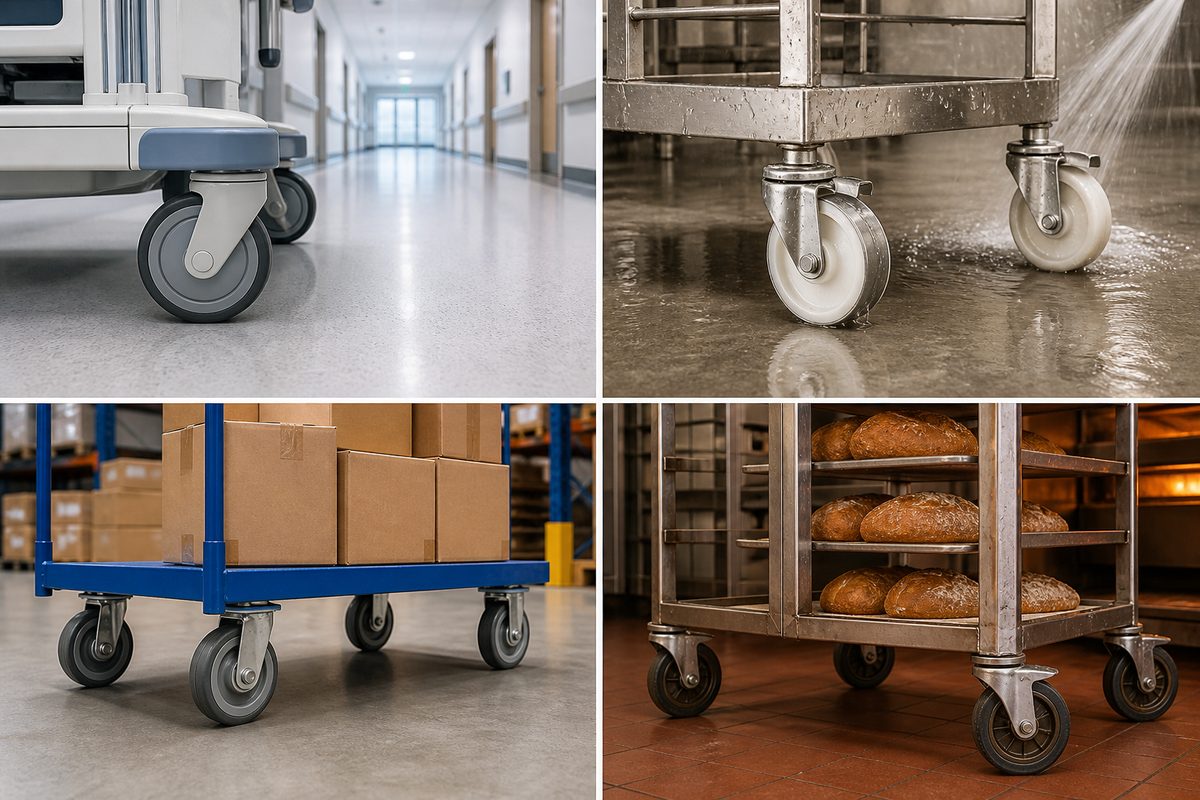
Medical, bakery, scaffold, furniture, luggage and AGV casters are application families rather than one universal construction. Each name signals typical requirements, but the buyer must translate the use into measurable specifications: load, speed, floor, noise, cleaning, electrical behavior, brakes, temperature, duty and regulatory context.
Practical Case: One Factory, Three Caster Types
A manufacturer needs casters for three mobile assets. An assembly cart moves 600 kg through long indoor aisles, a stainless washdown table carries 220 kg near food equipment, and a tool stand carries 90 kg inside a compact cell. Buying one “standard industrial caster” for all three appears economical but creates conflicting requirements.
The assembly cart uses two swivel and two rigid polyurethane casters selected for tracking, obstacle crossing and load. The washdown table uses corrosion-resistant brackets, compatible wheel and bearing materials, and total locks for stable work. The light tool stand uses four compact swivel casters because maneuverability and low height matter more than straight tracking.
Standardization is applied only where requirements overlap: fastener policy, inspection checklist and supplier documentation. Wheel type, bracket, bearing and layout remain application-specific. This reduces failure risk while preserving purchasing efficiency.
Engineer Experience
Build a selection matrix before requesting prices. Put each asset in a row and list maximum mass, caster count, speed, floor, obstacles, turning pattern, noise, temperature, chemicals, cleaning and brake function. The correct caster families normally become visible before any catalog is opened.
Do not use duty labels as a universal standard. One supplier’s medium-duty series may overlap another supplier’s heavy-duty series. Compare the exact model’s rated load, diameter, fork construction, bearing, speed and test conditions.
When reducing SKU count, standardize by validated requirement bands, not appearance. A controlled family of two or three proven caster specifications is usually safer than one compromised caster or dozens of unrecorded alternatives.
Factory Testing and Quality Context
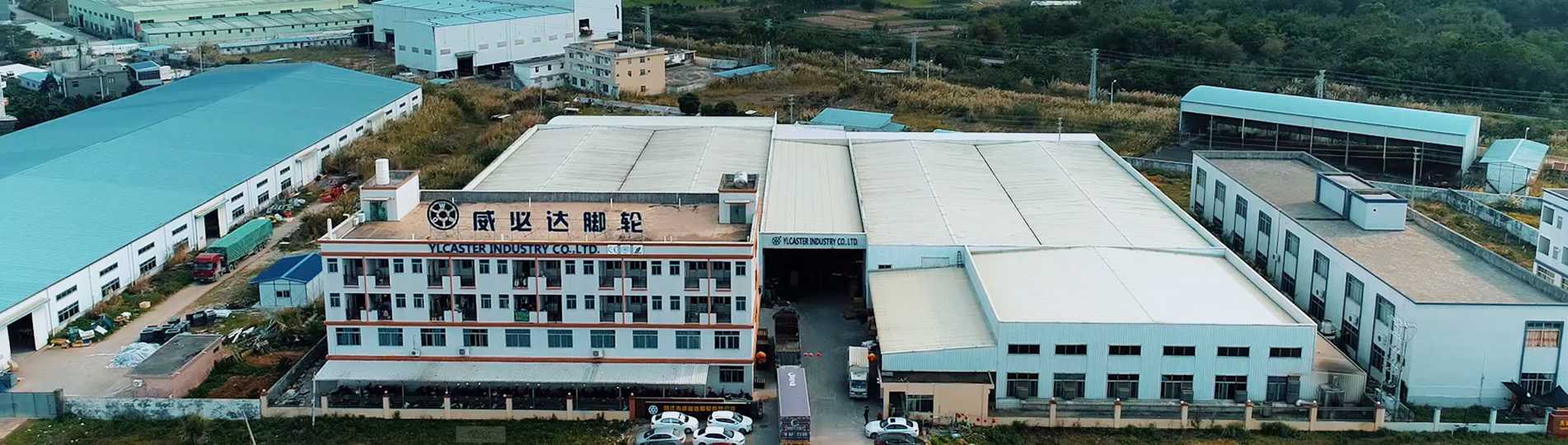
YLCASTER’s 2025 profile states that the company was established in 1997 and operates a 40,000 m² facility with about 200 employees. It reports more than 2,000 items and a company-wide portfolio spanning 10 kg to 30 tons, including light, industrial, medical, stainless and heavy-duty solutions. These figures demonstrate range; they do not replace a model-specific rating or application review.
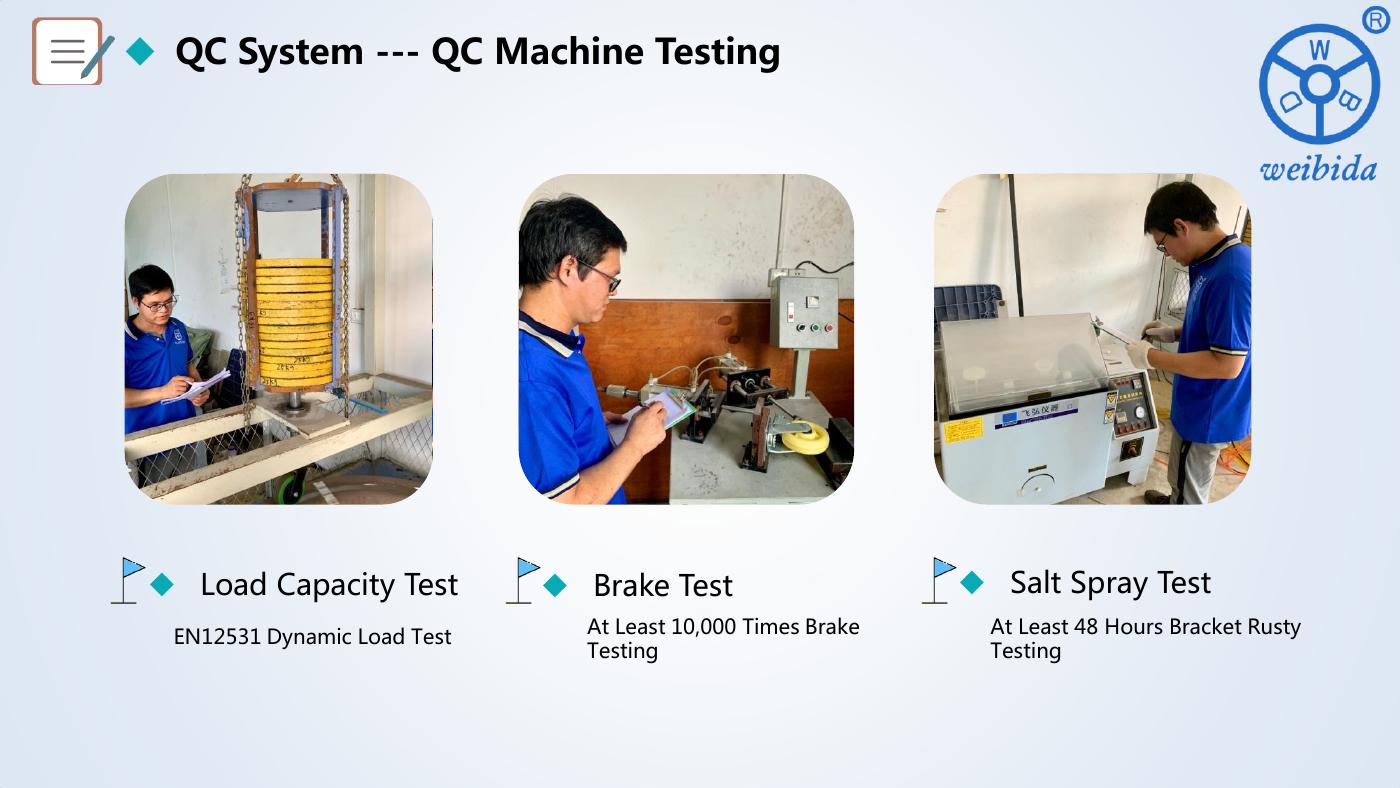
The profile lists CE, RoHS and ISO 9001 credentials and shows factory load, brake and corrosion testing resources. YLCASTER materials reference EN 12531 dynamic-load testing, at least 10,000 brake cycles and at least 48 hours of salt-spray testing. Buyers should specify which tests are required for the offered type and obtain acceptance evidence proportional to risk.
International Purchasing Notes
For export projects, the type name must be supported by a controlled specification. Include material, hardness, bearing, mounting drawing, finish, brake, rating basis, temperature, chemical exposure, label, packaging and test requirements. Ask every bidder to list deviations. Otherwise, two quotations for “4-inch PU swivel casters” may describe materially different products.
Target-market requirements also affect documentation and packing. Germany and Europe may prioritize technical files and specification control; Brazil, Colombia and Peru may need robust long-route packing and local-language labels; Korea may emphasize drawing accuracy; Saudi Arabia and Kenya can add heat and dust; Russia can add low-temperature and logistics needs. Confirm current local requirements with the importer.
FAQ
What are the two main types of casters?
The main movement types are swivel and rigid. Swivel casters steer; rigid casters roll in a fixed direction and improve tracking.
What is the best caster wheel material?
The best material depends on load, floor, noise, wear, chemicals, temperature and duty. No single tread is best for every application.
What is a plate-mount caster?
It uses a top plate with bolt holes to connect the caster to a flat equipment frame. Plate and hole dimensions must match the mounting surface.
When should I use stem casters?
Use them only with a compatible threaded insert, socket or tube adapter and after verifying load, retention, dimensions and swivel clearance.
What is a total-lock caster?
It is designed to restrict both wheel rotation and swivel movement when engaged. Confirm the exact mechanism and holding performance.
Are stainless-steel casters always washdown-safe?
No. The wheel, bearing, axle, brake and fasteners must also resist the cleaning chemicals, moisture and temperature.
Which caster type is quietest?
Rubber and TPR are often quieter than hard nylon or metal, but load, hardness, floor, bearing condition and wheel diameter also affect noise.
How do I compare caster types from different suppliers?
Use a common RFQ covering capacity basis, dimensions, materials, bearing, brake, environment, speed, duty, tests, packaging and change control.
Recommended Products
- All YLCASTER products: Compare multiple caster constructions, wheels and application families.
- Stainless and application solutions: Review options for hygienic or specialized operating environments.
- Healthcare bed casters: See a purpose-specific caster family with mobility and braking requirements.
Related Articles
- Casters For Food Processing Equipment
- Casters For Hospital Beds
- Casters For Warehouse Trolleys
- Heavy Duty Caster Buying Guide
Request a Quote
Technical note: company-level factory figures describe YLCASTER’s overall portfolio, not every individual model. Confirm the selected caster drawing, test conditions, rated capacity and compliance requirements before purchase.