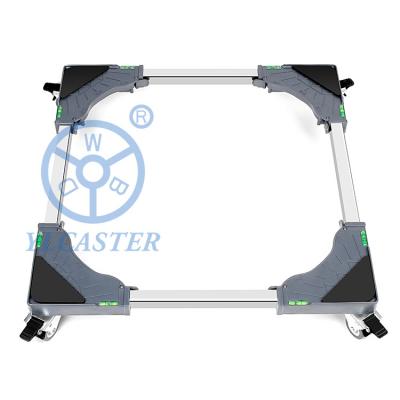


Casters For Hospital Beds
Jul 31 , 2026
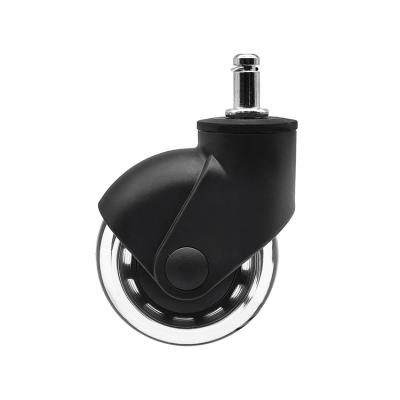
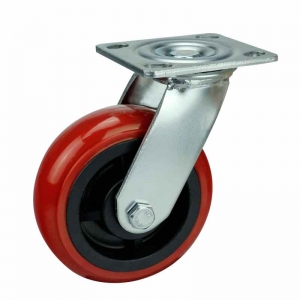
Casters for hospital beds must support the complete occupied bed while allowing low-effort steering, quiet travel, reliable braking and controlled directional movement. Specify total loaded mass, number of casters, wheel diameter, stem or plate interface, overall height, swivel radius, brake architecture, floor type and cleaning chemicals. TPR and polyurethane are common medical wheel materials because they can provide quiet, non-marking travel when correctly formulated. A central-lock system may coordinate braking and directional control, but its stem geometry and actuation mechanism must match the bed design. Capacity alone is not enough: hygiene, noise, tracking, shock and maintenance determine real performance.
| Requirement | Why it matters | What to specify |
|---|---|---|
| Loaded bed mass | Includes patient, mattress, accessories and equipment | Maximum verified mass plus dynamic safety margin. |
| Wheel material | Controls noise, marking, rolling and chemical response | TPR or PU formulation, hardness and cleaning exposure. |
| Wheel diameter | Affects thresholds, push force and bed height | Typically 75–125 mm in catalog medical series; verify model. |
| Locking system | Parking, directional travel or total lock | Individual brake, double brake or compatible central lock. |
| Mounting | Transfers load and activates the mechanism | Stem dimensions, plate pattern, insertion depth and tolerance. |
| Hygiene | Crevices can retain contamination | Smooth covers, accessible cleaning zones and suitable materials. |
| Noise | Important for patient comfort | Tread, bearing, floor and maintenance all affect sound. |
Begin with the clinical workflow. A bed may travel long corridors, enter elevators, rotate in compact rooms, cross thresholds and remain parked during treatment. Each mode places different demands on the casters. Directional control that improves corridor tracking may need to release for bedside maneuvering. Define who operates the bed, the expected floor transitions and whether accessories change the center of gravity.
Mounting and control interfaces deserve the same attention as the wheel. Stem diameter, length, hex or key geometry, insertion depth and retention must be controlled. For central locking, the linkage must reach brake, free and directional positions with adequate tolerance. Small errors can cause drag, incomplete braking or inconsistent behavior across the caster set. Request interface drawings and verify them on the real bed frame.
Hygiene review should cover exposed cavities, axle ends, covers, pedals and the plate or stem joint. Ask the hospital or equipment OEM for its cleaning agents and procedure rather than promising generic chemical resistance. Visual inspection after repeated cleaning can reveal whitening, swelling, corrosion, lubricant loss or stiff operation before field deployment.
Acceptance testing should use the complete loaded bed. Measure starting force, corridor tracking, turning, threshold crossing, brake holding and noise on representative floors. Exercise height adjustment and articulation to observe load shift. Inspect tread, bearings, covers and linkage after repeated cycles. Document the exact model code and drawing revision so replacement casters preserve the validated configuration.
Consider a bed system with a maximum loaded mass of 350 kg, including patient, mattress, powered frame, accessories and attached equipment. Five casters are installed, but load can shift during height adjustment or when crossing a threshold. Dividing 350 kg by five is only a nominal 70 kg; the engineering selection must address unequal loading, dynamic shock and the center caster's role.
The YLCASTER 2025 catalog lists medical families M001–M004 for hospital beds and medical equipment trolleys. Published examples include 75, 100 and 125 mm sizes. Depending on model, ratings shown in these families range from 60 kg to 135 kg per caster. For example, M004 catalog variants list 90 kg at about 75 mm, 120 kg at about 100 mm and 135 kg at about 125 mm. These values are model-specific and must be matched to the mounting and brake variant.
For this bed, the buyer should supply a load diagram, caster locations, threshold height, desired straight-line tracking, central-lock interface drawing and cleaning protocol. A prototype bed should then be evaluated for starting force, turning in a patient room, braking on the applicable slope, threshold shock, noise and repeated actuation.
Do not select medical casters from wheel diameter alone. Two 125 mm products can differ in stem, offset, bearing, cover, tread hardness, brake logic and capacity. Use a controlled drawing and exact model code.
A softer wheel is not automatically quieter in the full bed. Loose accessories, bed-frame resonance, worn bearings and tread-floor stick-slip can dominate sound. Test the assembled bed on the hospital's actual vinyl, tile or resin flooring.
Central locking requires system-level validation. Pedal travel, hex-bar alignment, stem insertion, directional position and brake release must remain reliable after repeated cycles. A caster that works individually can still perform poorly when installed with incorrect linkage tolerances.
Cleaning compatibility should be reviewed with the end user's disinfectants and process. Ask about concentration, temperature, contact time and rinse practice. Stainless components or protected steel may be appropriate, but the complete caster includes tread, bearings, seals and fasteners.
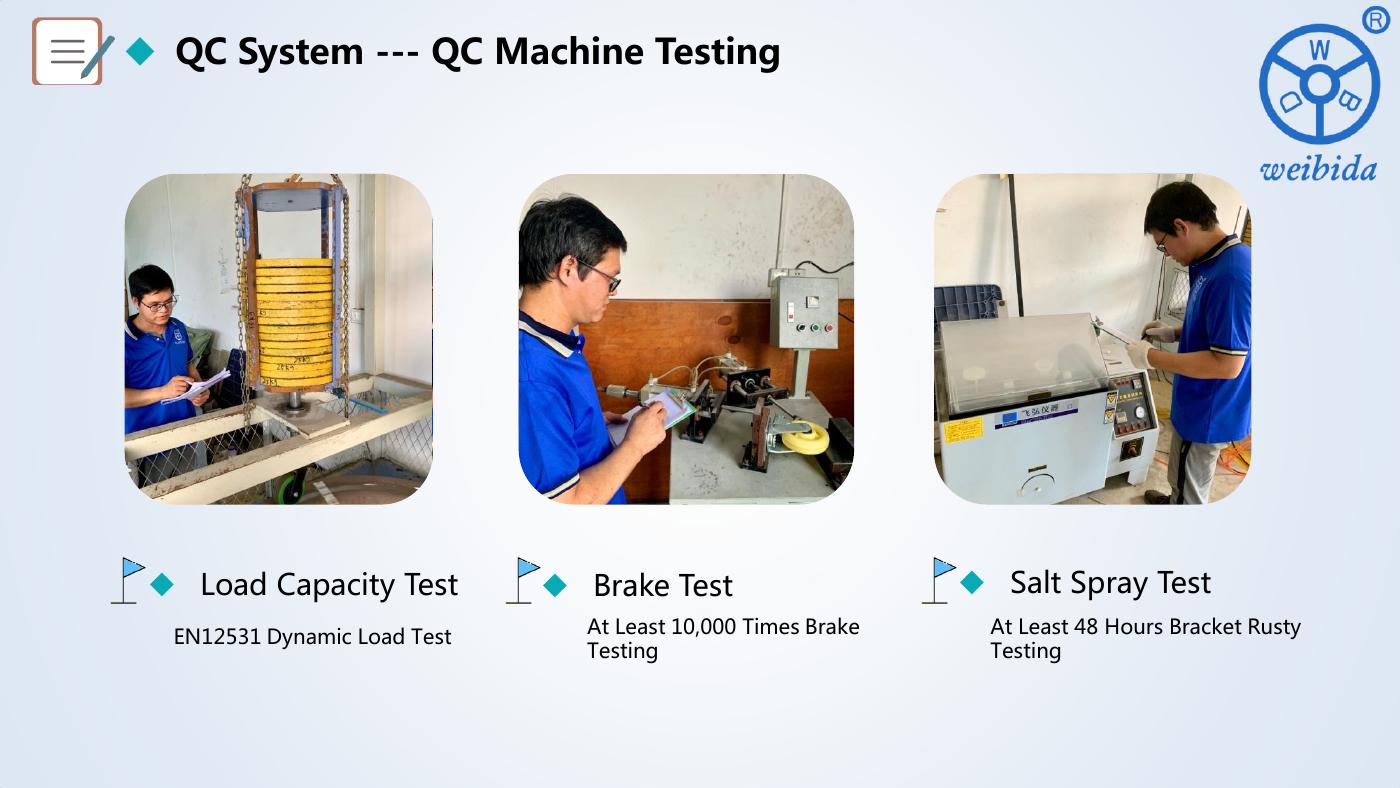
YLCASTER was established in 1997. The 2025 company profile reports a 40,000 m² plant, about 200 employees, more than 2,000 caster items, and an available load-capacity range from 10 kg to 30 tons across the full portfolio. The same source lists CE, RoHS and ISO 9001 credentials. These company-level figures describe the portfolio and factory; they are not a rating for every individual caster.
Factory materials show load-capacity, brake and corrosion testing resources. The exact test report, rating and acceptance criteria must be requested for the selected model; company capability statements are not substitutes for a model-specific result.
For casters for hospital beds, international buyers should separate technical approval from commercial approval. First freeze the model, drawing revision, materials, rating basis, test scope and sample. Then compare MOQ, lead time, Incoterm, carton quantity, pallet dimensions, gross weight, spare parts and warranty process. This prevents a shipping or packaging change from quietly altering the approved caster. Ask the supplier to list every deviation from the RFQ instead of hiding alternatives in a general quotation.
Projects for Germany and wider Europe may emphasize documentation, controlled specifications and corrosion performance; buyers in Brazil, Colombia and Peru may also need robust export packing and clear Portuguese or Spanish labeling; Korea may require precise drawings and consistent finish; Saudi Arabia and Kenya can add heat, dust, storage and route concerns; Russia may require climate and logistics review. These are planning prompts, not legal conclusions. The importer must confirm current local regulations, language, conformity and customs requirements for the final equipment.
Before shipment, approve label content and photograph the packed pilot carton. Link carton labels to the model and purchase order, and request final inspection evidence appropriate to the risk. On receipt, check identity, dimensions, visible damage, wheel rotation, swivel and brake function before releasing the lot to production. Early feedback with model and lot details helps the supplier investigate quickly and protects repeat-order consistency.
Hospital beds commonly use covered medical casters with TPR or PU wheels, stem mounting and either individual or central locking. The exact choice depends on bed mass, interface, steering design and cleaning requirements.
TPR is commonly used for quiet, floor-friendly medical mobility. Confirm hardness, load rating, rolling resistance, chemical compatibility and marking performance on the actual floor.
It is a caster designed to connect to a bed's coordinated actuation system so multiple casters can be set to brake, free swivel or directional mode. Interfaces are not universally interchangeable.
Calculate from the complete loaded bed and realistic load distribution, then allow for dynamic and uneven loading. Do not simply divide by the caster count without considering geometry and applicable equipment requirements.
A larger wheel usually crosses thresholds more easily and reduces push effort, but changes bed height, swivel envelope and linkage geometry. Verify all dimensions before selection.
Only when the tread, cover, bracket, bearings and lubricants are compatible with the specified chemical process. Provide the disinfectant data to the supplier and validate a sample.
Tread-floor interaction, bearing wear, loose mounting, brake drag, debris and frame vibration can all cause noise. Diagnose on the complete bed under load.
Both architectures exist. A fifth caster can improve directional control or maneuvering, but the bed frame and control strategy must manage load sharing and retraction or contact behavior.
Image note: the article cover is an application visualization created for YLCASTER. Product specifications and factory statements are based on the YLCASTER 2025 catalog and company profile. Confirm the final product model and test report before purchase.