

Categories
Latest blog
Where can I find heavy-duty swivel casters for manufacturing equipment
Sep 02 , 2026
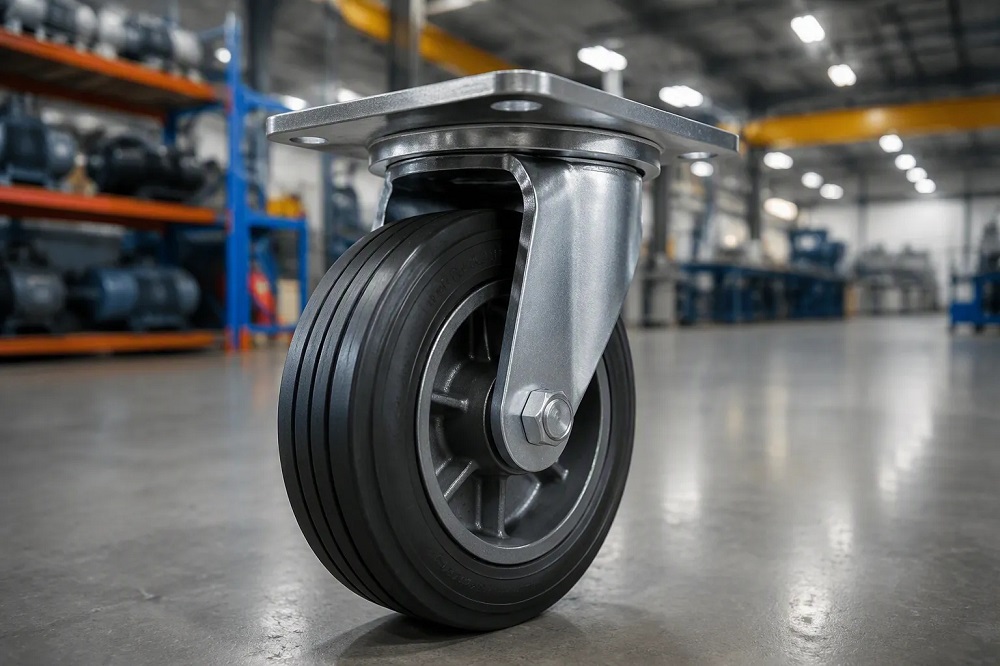
Selecting the right super heavy duty caster manufacturer is the single most critical decision for operational efficiency, equipment longevity, and workplace safety in heavy manufacturing. The 2026 market features American leaders Hamilton Caster, Colson Group, and RWM Casters, alongside European precision engineers Blickle, Tente, and Tellure Rota. Your central dilemma: American ruggedness and brute-force durability versus European precision engineering and ergonomic innovation. You may also explore a super heavy duty caster manufacturer China, such as an american type heavy duty casters supplier China or a european type heavy duty caster manufacturer China. Statistics show that proper caster selection extends equipment replacement intervals from three to over five years, improves safety by 30%, and supports over 75% of material handling operations. This article dissects the key differences, compares design philosophies, and provides a practical framework for choosing your ideal caster.
Choose casters rated for at least 3,000 pounds each, and apply a 1.5x to 2x safety factor to your calculated load.
American manufacturers like Hamilton, Colson, and RWM excel in ruggedness and impact resistance, ideal for heavy fabrication and extreme loads.
European manufacturers like Blickle, Tente, and Tellure Rota lead in precision, ergonomics, and rolling efficiency, perfect for AGVs and cleanrooms.
Match your mounting type (top plate, stem, or weld-on) and bolt pattern (ANSI or DIN) to your equipment to ensure a secure fit.
Consider total cost of ownership, not just purchase price; premium casters last longer and reduce downtime costs.
Smart casters with sensors and IoT connectivity enable predictive maintenance and real-time load monitoring, preventing failures.
European Total Lock brakes secure both wheel and swivel with one pedal, enhancing safety and positioning control.
For maximum durability, choose forged steel or cast iron wheels; for floor protection and quiet operation, choose polyurethane wheels.
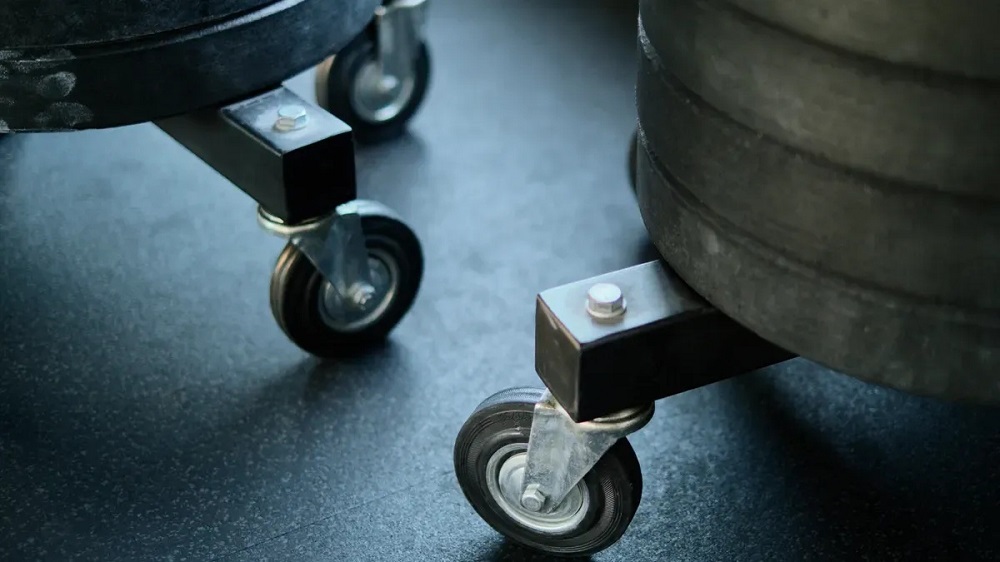
You cannot classify a caster as super heavy duty based on size alone. The definition hinges on engineering standards, material science, and load ratings that far exceed standard industrial casters. Understanding these parameters helps you match the right product to your equipment.
A super heavy duty caster must support at least 3,000 pounds per caster. This threshold separates true heavy-duty equipment from standard industrial casters. Manufacturers rate these products for continuous use in demanding environments like stamping presses, die tables, and large-scale material handling systems. You will find casters in this class rated up to 20,000 pounds or more per unit.
You must distinguish between dynamic and static load ratings. Dynamic load refers to the weight a caster can handle while in motion. Static load represents the maximum weight it can support when stationary. Dynamic ratings always sit lower than static ratings because movement introduces additional forces, including acceleration, deceleration, and shock loads. Always specify your application's dynamic requirements when consulting with manufacturers.
Safety Factor Rule:You should always apply a safety factor of 1.5x to 2x your calculated load. If your equipment weighs 6,000 pounds distributed across four casters, each caster carries 1,500 pounds. Multiply that by 1.5 to 2.0, and you need casters rated between 2,250 and 3,000 pounds each.
This margin accounts for uneven weight distribution, impact loads, and unexpected overloads. Skipping this step leads to premature bearing failure, cracked yokes, and dangerous equipment instability.
You will encounter two primary manufacturing methods for top plates and yokes: forged and fabricated. Forged components start as solid steel heated and shaped under extreme pressure. This process aligns the grain structure, producing parts with superior strength and impact resistance. Fabricated components use welded steel plates and tubes. They offer design flexibility and lower costs but cannot match the fatigue resistance of forged parts. For continuous heavy loads, choose forged components.
Traditional swivel casters use a central kingpin to connect the yoke to the top plate. This design works well but creates a potential failure point under extreme stress. Kingpinless designs use a large-diameter bearing raceway instead. This configuration distributes loads across a wider surface area, eliminates the kingpin failure mode, and provides smoother swivel action. You should prioritize kingpinless designs for loads exceeding 10,000 pounds per caster.
Bearings and raceways must withstand constant friction and heavy loads. Manufacturers heat-treat these components to increase surface hardness while maintaining core toughness. This process extends service life and reduces maintenance frequency. Look for casters with hardened steel raceways and precision-ground bearings. These components resist brinelling, a permanent indentation caused by static overload.
Polyurethane wheels on cast iron cores offer excellent floor protection and load capacity. Molded polyurethane bonds directly to the core during manufacturing. This method provides superior adhesion but complicates replacement. Bolt-on polyurethane tires allow quick replacement without discarding the entire wheel. You should choose molded options for permanent installations and bolt-on versions for applications requiring frequent tire changes.
For maximum durability, consider forged steel or cast iron wheels. These materials handle extreme temperatures, resist chemical damage, and provide unmatched load capacity. They do, however, damage sensitive floors and produce more noise during operation. Use them in foundries, steel mills, and outdoor applications where floor protection matters less than durability.
Standard wheels fail in extreme environments. High-temperature applications require specialized wheels made from heat-stabilized nylon or phenolic materials. These wheels withstand continuous temperatures up to 500°F. Chemical-resistant options use polyurethane formulations or specialty polymers that resist oils, solvents, and acids. You must match the wheel material to your specific environmental conditions to prevent premature failure.
The American manufacturing landscape offers you three dominant players in the super heavy duty caster market. Each company brings distinct engineering philosophies, manufacturing capabilities, and application expertise. Understanding their strengths helps you match the right partner to your specific operational demands.
Hamilton Caster has defined American heavy-duty caster manufacturing for over a century. You will find their products in aerospace facilities, automotive plants, and heavy fabrication shops across the nation. Their reputation rests on an unwavering commitment to structural integrity and custom engineering solutions.
Hamilton Caster is a trusted leader in heavy-duty material handling solutions... For over a century, we've built products renowned for their unmatched strength, durability, and performance in demanding environments like aerospace, automotive, and heavy manufacturing.
You will discover that Hamilton's Signature Series represents the pinnacle of their engineering expertise. These casters feature forged steel yokes, precision-ground bearings, and heat-treated raceways designed for continuous operation under extreme loads. The company maintains an in-house engineering department that designs custom solutions for unique applications. You can request modifications to top plate dimensions, wheel materials, or braking systems without compromising structural integrity. Their engineers work directly with your team to develop casters that meet exact specifications.
Hamilton casters excel in applications where shock loads and impact forces threaten standard equipment. The forged construction aligns metal grain structure, creating components that resist cracking and deformation. You will notice the difference in stamping press operations where repeated impact loads would destroy lesser casters. Their raceways undergo deep case hardening, extending service life even under abrasive conditions. This durability translates directly into reduced maintenance costs and fewer production interruptions.
You should consider Hamilton casters for equipment that experiences violent impact forces. Stamping presses generate tremendous shock loads during each cycle. Die tables require precise positioning under heavy weight. Heavy fabrication operations demand casters that withstand weld splatter, metal shavings, and constant movement. Hamilton's product line addresses each of these scenarios with specialized wheel compounds and reinforced structural components. Their casters handle loads from 3,000 to 20,000 pounds per unit, giving you flexibility across multiple production lines.
Colson Group operates as the largest caster manufacturer in the Americas. You will encounter their products in virtually every industrial sector, from automotive assembly to warehouse distribution. Their scale enables competitive pricing without sacrificing quality standards.
Colson established the dimensional standards that many American equipment manufacturers design around. You can replace a Colson caster with another Colson unit without modifying your equipment. This interchangeability simplifies inventory management and reduces downtime during maintenance. Their top plates, bolt patterns, and stem dimensions follow industry-standard specifications. You will find replacement units available through distributors nationwide, ensuring rapid access when failures occur.
You benefit from Colson's massive production capacity through consistent availability and competitive pricing. Their manufacturing facilities employ automated assembly lines that produce thousands of casters daily. This volume allows them to maintain substantial inventory levels across their distribution network. You can order standard configurations with minimal lead times, keeping your operations running without extended delays. Their quality control processes ensure each unit meets documented specifications before shipment.
You should evaluate Colson casters for applications requiring standardized components and reliable performance. Automotive assembly lines demand casters that move smoothly along guided tracks while supporting heavy vehicle components. Material handling carts benefit from Colson's consistent swivel action and predictable rolling resistance. Their product range includes polyurethane wheels that protect painted floors and forged steel options for rugged environments. You will find appropriate solutions for loads ranging from 3,000 to 15,000 pounds per caster.
RWM Casters specializes in extreme load applications where standard designs fail. You will find their products supporting aircraft ground equipment, massive storage tanks, and specialized industrial machinery. Their engineering team focuses on kingpinless technology and safety-enhancing features.
RWM's kingpinless design eliminates the central pin that traditionally connects the yoke to the top plate. This configuration distributes loads across a larger bearing surface, reducing stress concentrations and extending service life. You will appreciate the smoother swivel action and reduced maintenance requirements. Their load capacities set industry records:
|
Series |
Load Capacity |
Application Context |
|---|---|---|
|
95 Series |
Up to 20,000 lbs |
Heavy-duty applications |
|
125 Series |
Up to 40,000 lbs |
Ground support equipment, die carts, aircraft engine stands |
|
2-125 Series |
Twice the capacity of 125 Series (i.e., up to 80,000 lbs) |
Dual wheel casters for high weight capacities |
|
76 Series |
Up to 7,000 lbs |
Heavy loads with 3-inch wheel width |
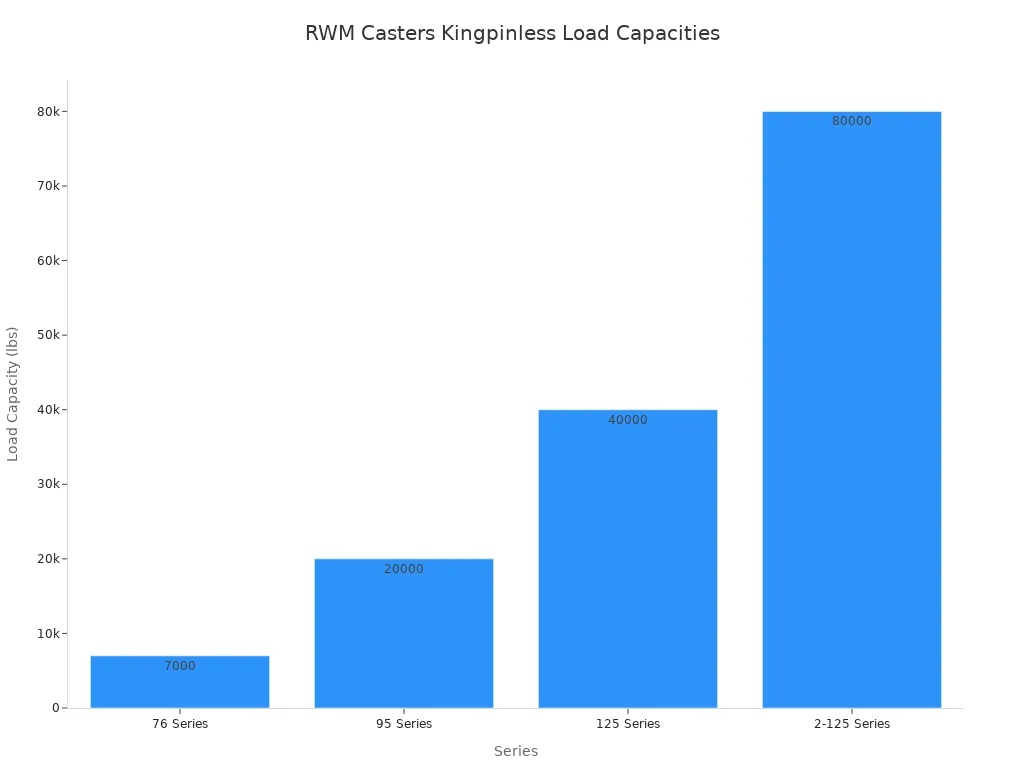
You will find the 125 Series particularly suited for aircraft engine stands and ground support equipment. The 2-125 Series doubles that capacity through dual wheel configurations, accommodating the heaviest industrial loads. RWM's engineering team continues pushing the boundaries of what casters can support.
RWM integrates safety features directly into their caster designs. The Total Locking 65 Series provides both swivel locks and wheel brakes on each unit, allowing you to completely immobilize loads during maintenance or loading operations. The kingpinless design eliminates the traditional weak point, reducing failure risk and enhancing operational safety. You will also find corrosion-resistant zinc plating on many models, protecting against moisture, salt, and chemical exposure. These features support workplace safety programs and reduce accident potential.
|
Wheel Diameter |
Wheel Width |
Capacity (lbs) |
Wheel Type |
|---|---|---|---|
|
8" |
2" |
1800 |
Torus |
|
8" |
2" |
1500 |
Urethane on Iron |
|
8" |
2" |
1500 |
Urethane on Aluminum |
|
8" |
2" |
1200 |
Omega |
|
8" |
2" |
700 |
Signature |
|
8" |
2" |
750 |
Rubber on Aluminum-EHT |
|
8" |
2" |
500 |
Rubber on Iron |
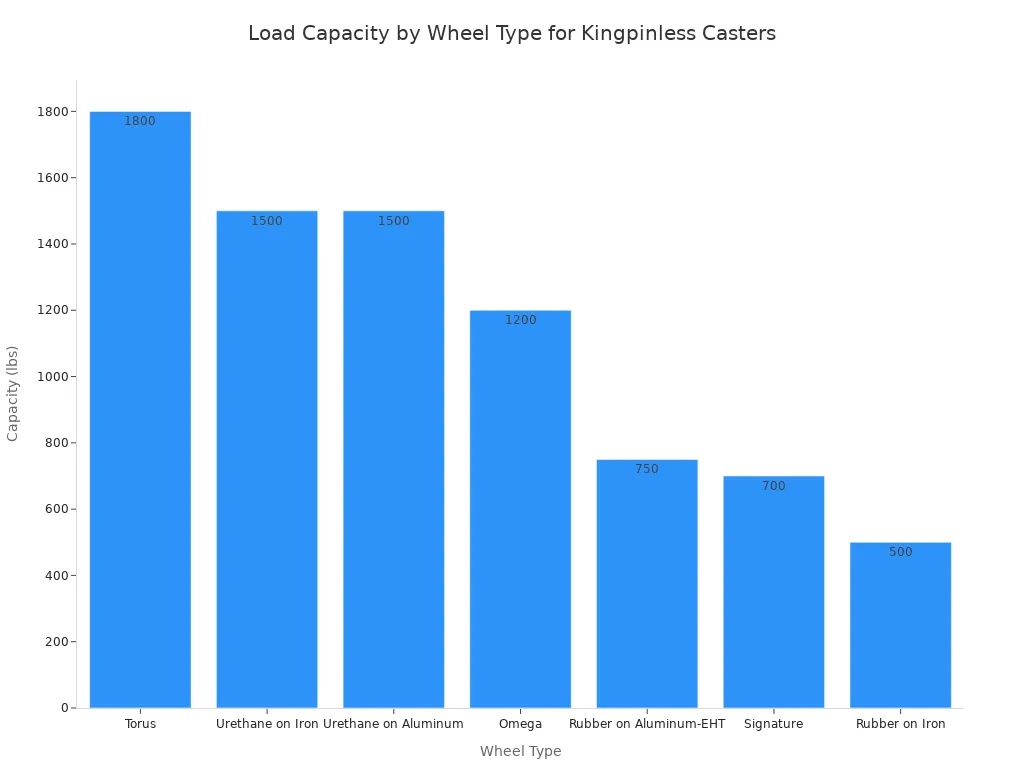
You should select RWM casters for applications involving massive loads and safety-critical operations. Aircraft ground support equipment requires casters that handle extreme weights while providing precise maneuverability. Large tank movement demands exceptional load distribution and stability. RWM's product line addresses both scenarios with specialized wheel compounds and reinforced structural components. Their casters support loads from 7,000 to 80,000 pounds per unit, making them the go-to choice for the heaviest industrial applications.
When you evaluate American manufacturers, consider your specific load requirements, environmental conditions, and operational patterns. Each of these three companies offers distinct advantages. Hamilton provides unmatched impact resistance and custom engineering. Colson delivers standardization and availability. RWM leads in extreme load capacity and safety features. Your choice of super heavy duty caster manufacturer should align with your equipment's demands and your facility's operational priorities.
While Hamilton, Colson, and RWM dominate the market, you should also evaluate three specialized manufacturers. Each company brings unique strengths to specific applications. Understanding their capabilities expands your options when selecting a super heavy duty caster manufacturer.
Caster Concepts operates as a super heavy duty caster manufacturer that prioritizes custom engineering over standardized production. You will find their design team working directly with clients to solve unique material handling challenges. The company focuses on ergonomic designs that reduce operator strain and improve workplace safety. Their engineers approach each project with a problem-solving mindset, developing innovative configurations that standard manufacturers cannot provide.
You benefit from their willingness to modify existing designs or create entirely new caster systems. They address challenges like extreme weight distribution, unusual mounting configurations, and specialized floor protection requirements. Their custom solutions often integrate features that improve maneuverability while maintaining load capacity. This approach gives you options when off-the-shelf products cannot meet your specific needs. Their competitive edge lies in delivering tailored solutions rather than forcing your application into a standard product.
Revvo Caster Company specializes in precision swivel action and specialized duty casters. You will appreciate their focus on smooth movement and predictable caster behavior. The company offers a wide range of specialized casters including kingpinless designs, top plate configurations, and low profile options. You can find solutions for specific equipment types like ISO containers, gang boxes, scaffolds, and aviation cargo systems.
Their braking systems deserve your attention. Revvo provides total stop brakes, wheel locks, directional locks, and various plugs and seals. These options give you precise control over caster movement in different operational scenarios. You can select the exact braking configuration that matches your safety requirements and workflow patterns. As part of the Colson Group, Revvo leverages a large manufacturing network while maintaining its specialized focus on niche applications.
Payson Casters has built a reputation for custom and forged caster solutions. You will find their products in applications requiring exceptional structural integrity. The company specializes in forged steel components that withstand continuous heavy loads and impact forces. Their engineering team works with you to develop casters that match your exact mounting requirements and load specifications.
You should consider Payson when your application demands unique top plate dimensions, specialized wheel materials, or non-standard bolt patterns. Their forged construction provides superior strength compared to fabricated alternatives. This durability translates into longer service life and reduced maintenance intervals. Their custom approach ensures you receive a caster designed specifically for your equipment rather than a modified standard product.
European manufacturers bring a different engineering philosophy to the caster market. You will find precision, ergonomics, and innovation at the forefront of their designs. Three companies dominate the European landscape: Blickle, Tente, and Tellure Rota. Each offers distinct advantages that appeal to specific industrial applications.
Blickle operates from Germany with a reputation for meticulous engineering and uncompromising quality. You will find their casters in facilities that demand precise movement and minimal maintenance. The company invests heavily in research and development, producing components that exceed industry standards for performance and longevity.
Blickle's German engineering heritage shows in every component they manufacture. You will notice the precision tolerances in their bearing assemblies and the quality of their steel fabrication. Their Total Lock braking system represents a significant advancement in caster safety technology. This system locks both the wheel rotation and the swivel action simultaneously with a single pedal movement. You gain complete immobilization of your equipment, preventing unintended movement during loading, unloading, or maintenance operations.
The Total Lock mechanism engages a brake pad against the wheel tread while a separate mechanism locks the swivel raceway. This dual-action approach eliminates the risk of equipment drifting or rotating unexpectedly. You will appreciate this feature in applications where precise positioning matters, such as assembly operations or machine tending. The braking system operates smoothly and reliably, even after thousands of cycles.
Blickle engineers focus extensively on swivel action and rolling resistance. You will find their casters move with remarkable ease, even under heavy loads. The secret lies in their precision-ground raceways and high-quality bearing configurations. These components reduce friction, allowing operators to maneuver heavy equipment with minimal effort.
The rolling resistance of Blickle casters also deserves your attention. Their wheel compounds and bearing designs minimize the force required to initiate and maintain movement. You will notice the difference when pushing loaded carts across factory floors. This efficiency reduces operator fatigue and improves productivity. The swivel lead, or the offset between the kingpin and wheel axle, is carefully calculated to provide stable tracking without excessive wobble.
You should consider Blickle casters for automated guided vehicles and cleanroom applications. AGVs require precise movement and consistent performance. Blickle's casters provide the accuracy and reliability these systems demand. Their low rolling resistance extends battery life and improves navigation accuracy.
Cleanroom environments present unique challenges for caster selection. You need components that do not shed particles or generate contamination. Blickle offers specialized wheel compounds and sealed bearing configurations that meet cleanroom standards. Their casters operate quietly and smoothly, minimizing disruption in sensitive manufacturing environments. You will find their products in pharmaceutical production, semiconductor fabrication, and medical device assembly facilities.
Tente brings Italian design sensibility to the caster industry. You will find their products combine aesthetic appeal with functional excellence. The company focuses on user experience, developing features that improve operator comfort and safety.
Tente's ergonomic pedal brakes set them apart from competitors. You will find their pedals positioned for easy access and designed for comfortable operation. The activation force is carefully calibrated to require minimal effort while providing secure locking. Operators can engage or release the brakes without bending or straining.
Their locking mechanisms offer multiple configurations to match your specific needs. You can choose between wheel-only locks, swivel-only locks, or total locks that secure both functions simultaneously. The pedal design incorporates visual indicators that show the lock status at a glance. You will appreciate this feature in busy production environments where quick verification of lock status improves safety.
Tente's modular system allows you to configure casters for specific applications without custom engineering. You will find interchangeable components that let you mix and match top plates, stems, wheels, and braking systems. This flexibility simplifies inventory management and reduces lead times for replacement parts.
Their advanced polymer wheels represent a significant advancement in caster technology. These wheels offer excellent load capacity while providing superior floor protection and noise reduction. You will find polymer compounds that resist chemicals, oils, and cleaning agents commonly used in food processing and pharmaceutical facilities. The wheels maintain their performance characteristics across a wide temperature range, making them suitable for both cold storage and hot washdown environments.
You should evaluate Tente casters for food processing and pharmaceutical equipment. Their polymer wheels resist the harsh chemicals and cleaning agents used in these industries. The sealed bearing configurations prevent contamination and withstand frequent washdowns. You will find their casters operating reliably in wet environments where standard casters fail prematurely.
The ergonomic features of Tente casters also benefit these applications. Workers in food processing facilities often move heavy equipment throughout the day. The low rolling resistance and smooth swivel action reduce physical strain. The pedal brakes allow quick and secure positioning of equipment during cleaning or maintenance operations. You will find their products in commercial kitchens, beverage production lines, and pharmaceutical manufacturing facilities.
Tellure Rota combines Italian design aesthetics with robust engineering for demanding applications. You will find their casters in facilities that require both visual appeal and exceptional durability. The company serves industries ranging from aerospace to heavy manufacturing.
Tellure Rota brings Italian design philosophy to industrial components. You will notice the attention to detail in their product finishes and overall appearance. Their casters feature clean lines and professional aesthetics that complement modern equipment designs. This focus on appearance does not compromise functionality. Each component undergoes rigorous testing to ensure it meets demanding performance standards.
The company offers a wide range of finishes and configurations that allow you to match casters to your equipment's visual identity. You will find options for powder coating, zinc plating, and stainless steel construction. These choices let you maintain a consistent appearance across your equipment fleet while ensuring appropriate durability for your operating environment.
Tellure Rota specializes in casters for extreme operating conditions. You will find their products handling temperatures that would destroy standard casters. Their high-temperature wheels use specialized materials that maintain structural integrity at elevated temperatures. These wheels resist deformation and maintain their load-bearing capacity even in foundry environments.
Their heavy-duty casters feature reinforced yokes and robust bearing systems designed for continuous operation under extreme loads. You will find forged steel components that withstand impact forces and abrasive conditions. The company's engineering team develops custom solutions for applications that exceed standard product capabilities. You can specify specialized wheel compounds, custom mounting configurations, and enhanced braking systems.
You should select Tellure Rota casters for foundries, ceramics production, and specialized machinery. Foundry environments expose equipment to extreme heat, molten metal splatter, and abrasive dust. Tellure Rota's high-temperature wheels and sealed bearings withstand these harsh conditions. You will find their casters operating reliably in furnace areas and casting lines.
Ceramics production involves heavy loads and abrasive materials that wear down standard components quickly. Tellure Rota's durable wheel compounds resist abrasion and maintain their performance characteristics. Their casters handle the weight of ceramic products while providing smooth movement across factory floors.
Specialized machinery often requires custom caster configurations. Tellure Rota's engineering team works with you to develop solutions that match your exact specifications. You will find their products in aerospace manufacturing, heavy equipment production, and custom industrial machinery. Their combination of design aesthetics and robust construction makes them a preferred choice for equipment manufacturers who value both appearance and performance.
When you evaluate European manufacturers, consider your specific application requirements and operating environment. Each company offers distinct advantages. Blickle provides precision engineering and superior rolling efficiency. Tente delivers ergonomic innovation and modular flexibility. Tellure Rota combines design aesthetics with extreme durability. Your choice of super heavy duty caster manufacturer should align with your operational priorities and performance expectations.
Beyond the dominant trio of Blickle, Tente, and Tellure Rota, you will find two additional European manufacturers that deserve your consideration. Wicke and Albion each bring distinct engineering traditions and specialized capabilities to the market. Understanding their unique positions helps you make a fully informed decision when selecting a super heavy duty caster manufacturer for your operations.
Wicke operates from Germany with a focus on precision engineering and custom solutions. You will find their casters in applications where standard products cannot meet the demanding specifications. The company maintains a flexible manufacturing approach that accommodates specialized requirements without sacrificing quality.
Wicke's engineering team excels at developing custom caster configurations for unique industrial challenges. You can request modifications to wheel compounds, yoke dimensions, bearing configurations, and mounting systems. Their engineers analyze your application parameters and develop solutions that address specific operational demands. This approach proves valuable when your equipment requires non-standard mounting patterns or specialized load distribution characteristics.
The company's German manufacturing heritage shows in their attention to tolerance and material quality. You will notice the precision fit of their components and the consistency of their welding. Their steel fabrication processes produce yokes that maintain their structural integrity under continuous heavy loads. The bearing systems incorporate high-grade steel and precise raceway geometry, delivering smooth swivel action and extended service life.
Wicke also offers specialized wheel options for demanding environments. You will find high-temperature wheels that withstand continuous operation above 400°F, chemical-resistant compounds that resist solvents and acids, and low-noise wheels for noise-sensitive facilities. Their engineering team provides guidance on wheel selection based on your floor conditions, load requirements, and environmental factors.
You should consider Wicke when your application demands a tailored solution rather than a standard catalog product. Their custom engineering capabilities give you the flexibility to optimize caster performance for your specific equipment. The company's commitment to German precision ensures that each custom solution meets rigorous quality standards.
Albion occupies a unique position in the caster market, blending American manufacturing standards with European design influence. You will find their products offering a practical middle ground between the ruggedness of American casters and the precision of European designs. This hybrid approach appeals to manufacturers seeking the best of both engineering traditions.
Albion's product line includes heavy-duty casters that incorporate European-style braking systems and ergonomic features. You will find total lock mechanisms that secure both wheel rotation and swivel action simultaneously. These systems provide enhanced safety and positioning control compared to traditional American-style wheel-only brakes. The pedal designs prioritize operator comfort and ease of use, reducing physical strain during repeated engagement.
The company also integrates European design principles into their wheel compounds. You will find advanced polymer wheels that offer excellent floor protection and rolling efficiency. These wheels reduce the force required to move heavy loads, improving operator productivity and reducing fatigue. The polymer formulations resist many chemicals and cleaning agents, making them suitable for food processing and pharmaceutical applications.
Albion maintains American-standard mounting dimensions, ensuring compatibility with existing equipment. You can replace an American-made caster with an Albion unit without modifying your equipment's bolt pattern or stem configuration. This interchangeability simplifies procurement and reduces downtime during maintenance. Their distribution network provides ready access to replacement parts across North America.
You should evaluate Albion when you want European-style features without the complexity of adapting to DIN-standard mounting dimensions. Their hybrid approach gives you access to advanced braking systems and ergonomic improvements while maintaining compatibility with your existing equipment. The company serves a wide range of industries, including material handling, automotive, and general manufacturing.
When you compare Wicke and Albion, consider your specific priorities. Wicke offers deep customization capabilities and German precision engineering. Albion provides a practical blend of American compatibility and European innovation. Both manufacturers deliver reliable performance for heavy-duty applications. Your choice depends on whether you need a fully custom solution or a hybrid product that bridges two engineering traditions.
You face a fundamental choice between two distinct engineering traditions. American manufacturers prioritize brute strength and impact resistance. European manufacturers emphasize precision, ergonomics, and rolling efficiency. These philosophical differences manifest in every component, from material selection to braking systems. Understanding these distinctions helps you select the right super heavy duty caster manufacturer for your specific application.
American casters use thicker steel plates and heavier yokes. You will find top plates measuring 1/2 inch or more in thickness. This added material provides a safety margin against impact forces and unexpected overloads. European casters use thinner, high-strength steel alloys. You get comparable structural integrity with reduced overall weight. The trade-off involves impact resistance. American designs absorb shock loads better. European designs excel in applications requiring frequent movement and precise positioning.
European manufacturers maintain tighter manufacturing tolerances. You will notice the difference in bearing fit and raceway geometry. Their precision-ground components deliver smoother swivel action and lower rolling resistance. American manufacturers focus on consistency and repeatability. Their processes prioritize structural integrity over fine tolerances. You get reliable performance, though you may sacrifice some operational smoothness. The choice depends on whether you value impact resistance or movement efficiency.
You must consider mounting compatibility when selecting a super heavy duty caster manufacturer. American manufacturers follow ANSI standards. European manufacturers follow DIN standards. These systems use different dimensions and bolt patterns.
|
Specification |
ANSI (American) |
DIN (European) |
|---|---|---|
|
Common Top Plate Size |
4" x 5" |
100mm x 120mm |
|
Bolt Hole Diameter |
7/16 inch |
9mm |
|
Bolt Hole Spacing |
2-3/4" x 3-3/4" |
60mm x 80mm |
You cannot interchange these components without modifying your equipment. Verify your existing bolt pattern before ordering replacement casters.
Stem-mounted casters also differ between the two standards. American stems use inch-based threads, such as 1/2-13 or 5/8-11. European stems use metric threads, such as M12 or M16. You will also find differences in stem length and diameter. These variations affect installation and replacement procedures. Always measure your existing stem dimensions before contacting a manufacturer.
American casters typically feature wheel brakes that lock the wheel rotation. You engage these brakes with a foot pedal or hand lever. The brake pad presses against the wheel tread, preventing movement. Directional locks serve a different purpose. They lock the swivel action, keeping the caster pointed in a straight line. You use these locks when moving equipment over long distances. American systems require separate controls for each function.
European manufacturers offer Total Lock systems that combine both functions. You activate a single pedal to lock the wheel rotation and the swivel action simultaneously. This design provides complete immobilization with one motion. You gain enhanced safety during loading, unloading, or maintenance operations. The Total Lock system eliminates the risk of equipment drifting or rotating unexpectedly. You will find this feature particularly valuable in applications requiring precise positioning.
|
Feature |
American Standard |
European Standard |
|---|---|---|
|
Wheel Brake |
Separate control |
Integrated with Total Lock |
|
Swivel Lock |
Separate control |
Integrated with Total Lock |
|
Activation |
Multiple pedals |
Single pedal |
|
Positioning Control |
Moderate |
Superior |
Your choice between American and European casters depends on your operational priorities. American designs offer rugged durability and impact resistance. European designs provide precision movement and advanced safety features. Evaluate your application requirements carefully to determine which engineering philosophy aligns with your needs.
You cannot evaluate a super heavy duty caster manufacturer without examining rolling ease and maneuverability. These metrics determine how easily your operators move heavy equipment, how much physical effort they expend, and how precisely they position loads. The engineering choices behind these performance characteristics separate premium manufacturers from commodity producers.
Swivel lead refers to the distance between the kingpin axis and the wheel axle centerline. This offset determines how a caster tracks and turns. You will find that American manufacturers typically use a larger swivel lead, often measuring 2 inches or more on heavy-duty models. This configuration provides stable straight-line tracking and reduces the tendency for casters to wander. European manufacturers, by contrast, employ tighter offset geometry, frequently in the 1.25 to 1.5-inch range. This design delivers quicker steering response and tighter turning radii.
The offset geometry also affects how loads transfer during turns. A larger swivel lead creates a longer lever arm, which increases the force required to initiate a turn. You will notice this difference when maneuvering loaded carts in confined spaces. European casters with shorter offsets require less initial effort to change direction. However, they sacrifice some straight-line stability at higher speeds. Your choice depends on whether your operators navigate narrow aisles or move equipment across open floors.
|
Design Characteristic |
American Style |
European Style |
|---|---|---|
|
Swivel Lead |
2 inches or more |
1.25 to 1.5 inches |
|
Straight-Line Stability |
Superior |
Moderate |
|
Turning Effort |
Higher |
Lower |
|
Turning Radius |
Wider |
Tighter |
Rolling resistance directly affects both towing requirements and manual propulsion. You will find that European casters typically exhibit lower rolling resistance due to precision-ground bearings and optimized wheel compounds. This efficiency translates into reduced towing forces. A load that requires 150 pounds of force to pull with American casters may need only 100 pounds with European equivalents. This difference becomes significant when you move equipment repeatedly throughout a shift.
Manual propulsion amplifies these differences. Operators pushing heavy carts experience greater fatigue with higher rolling resistance. You will notice that European casters with advanced polymer wheels and sealed precision bearings require less physical effort. This ergonomic advantage improves productivity and reduces workplace injuries. American casters, with their heavier construction and thicker steel components, demand more force to initiate movement. However, they provide superior durability in impact-heavy environments where rolling efficiency matters less than structural survival.
You should also consider how swivel lead affects towing stability. American casters with longer offsets track straighter when towed, reducing the risk of fishtailing. European casters with shorter offsets respond more quickly to steering input, which benefits manually operated equipment. Your operational pattern determines which characteristic provides greater value. Frequent repositioning favors European geometry. Long-distance towing favors American design.
Selecting the right super heavy duty caster manufacturer requires a systematic approach. You cannot rely on guesswork or generic recommendations. Each application presents unique demands that influence your final choice. Follow these steps to match your equipment with the ideal caster solution.
Your first task involves precise load calculation. This number determines every subsequent decision. You need accurate data about your equipment's total weight and how that weight distributes across your caster configuration.
Start by weighing your equipment at its maximum operational load. Include the product, tooling, and any auxiliary components. Then divide this total by the number of casters you plan to install. Most equipment uses four casters, but you may require six or eight for extremely heavy loads. Consider the following example:
|
Parameter |
Minimum Requirement |
Recommended Specification |
|---|---|---|
|
Cart weight |
2,000 lbs |
2,000 lbs |
|
Number of casters |
4 |
4 |
|
Load capacity per caster |
500 lbs |
600–700 lbs |
|
Rationale |
Basic weight distribution |
Accounts for uneven floors, sudden impacts, and safety margins |
This calculation shows why you should never select casters based on minimum requirements alone. The recommended specification provides a buffer that protects your equipment and your operators.
You must apply a safety factor to your calculated load. Industry guidance recommends a tiered approach:
Use a 2x safety factor for stationary equipment that rarely moves.
Apply a 3x factor for manually operated carts that move frequently.
Select a 4x factor as the industrial standard for most manufacturing applications.
Consider up to 6x for heavy-industrial crane loading or aerospace tooling.
This framework prevents premature failure and unplanned downtime. A caster that operates at its maximum rated capacity will fail faster than one with adequate margin. You extend equipment life and reduce maintenance costs by choosing a super heavy duty caster manufacturer that offers products with sufficient capacity.
Your facility's conditions directly impact caster performance and longevity. You must evaluate both floor conditions and environmental exposures before making a selection.
Smooth concrete floors allow you to use wheels with harder compounds and smaller diameters. These wheels roll easily and provide excellent load capacity. Rough asphalt or uneven surfaces demand larger wheels with softer tread compounds. These wheels absorb shock and maintain traction across irregular terrain. You should also consider floor cleanliness. Metal shavings, debris, or abrasive particles accelerate wheel wear. Choose sealed bearings and appropriate wheel materials to resist contamination.
Environmental factors determine which materials you can use. Chemical exposure requires wheels and frames made from resistant materials. Stainless steel frames and specialized polymer wheels withstand acids, solvents, and cleaning agents. Water exposure demands sealed bearings and corrosion-resistant finishes. Extreme temperatures require specialized wheel compounds. High-temperature applications need heat-stabilized materials that maintain structural integrity. Cold storage facilities require wheels that resist brittleness and maintain flexibility at low temperatures.
Your operational workflow dictates how much maneuverability you need. Consider how your operators move equipment through your facility. Tight spaces demand different configurations than open floors.
The ratio of swivel to rigid casters affects both maneuverability and stability. You have several configuration options:
Standard configuration: Two swivels and two rigids works for most carts.
Tight route configuration: For very tight routes, three swivels and one rigid may be better.
Alternative tight route option: Four swivels with two directional locks can also be used for very tight routes.
Swivel casters provide steering capability but reduce straight-line stability. Rigid casters track straight but limit turning ability. Your choice depends on your facility layout and how frequently operators change direction.
Consider how often you need to position equipment precisely. Directional locks keep swivel casters pointed straight, improving control during long moves. Total lock brakes secure both wheel rotation and swivel action simultaneously. This feature proves essential for loading operations, maintenance work, or any situation requiring complete equipment immobilization. European manufacturers excel at total lock systems. American manufacturers typically offer separate controls for each function. Your safety requirements and operational patterns determine which system suits your needs.
Your mounting configuration determines how the caster attaches to your equipment. An incorrect match creates dangerous instability and accelerates component failure. You must measure your existing mounting points before contacting any super heavy duty caster manufacturer.
You need precise measurements of your current mounting arrangement. Start with the top plate dimensions. Measure the length and width of the plate surface. Then measure the distance between bolt hole centers. Record both the horizontal and vertical spacing. You also need the bolt hole diameter. Use a caliper for accuracy. Finally, note the number of bolt holes. Most heavy-duty applications use four holes, but you may encounter configurations with two, six, or eight.
|
Measurement |
Tool |
Unit |
|---|---|---|
|
Top plate length |
Tape measure |
Inches or millimeters |
|
Top plate width |
Tape measure |
Inches or millimeters |
|
Bolt hole spacing |
Caliper |
Inches or millimeters |
|
Bolt hole diameter |
Caliper |
Inches or millimeters |
|
Bolt hole count |
Visual inspection |
Number |
Compare your measurements against the manufacturer's specifications. American manufacturers follow ANSI standards. European manufacturers follow DIN standards. These systems use different dimensions. You cannot interchange them without modifying your equipment.
You have three primary mounting options. Each serves a different purpose.
|
Mounting Type |
Best For |
Installation Method |
|---|---|---|
|
Top Plate |
Most industrial equipment |
Bolting to a flat surface |
|
Stem |
Light to medium loads |
Inserting into a socket or tube |
|
Weld-On |
Permanent installations |
Welding directly to the equipment |
Top plate casters offer the most versatility. You can remove and replace them without specialized tools. Stem casters suit applications where space limits plate size. Weld-on casters provide the strongest connection. You cannot remove them easily, but you gain maximum structural integrity. Choose weld-on options for permanent installations that never require caster replacement.
Your purchase decision extends beyond the initial price tag. You must consider the complete lifecycle cost of your casters. This evaluation prevents budget surprises and ensures you select a super heavy duty caster manufacturer that delivers long-term value.
A cheaper caster often costs more over its lifetime. You will replace low-quality units more frequently. Each replacement requires labor, disposal, and procurement time. Premium casters from established manufacturers last longer and require less maintenance. Their sealed bearings resist contamination. Their forged yokes withstand impact forces. Their heat-treated raceways resist wear.
Calculate your total cost by adding the purchase price to the expected maintenance and replacement expenses over five years. You will often find that a higher-quality caster costs less per year of service. This calculation justifies the higher upfront investment.
Downtime Cost Warning:A single caster failure can halt your entire production line. The cost of that downtime often exceeds the price of the caster by a factor of ten or more. When you calculate the true cost of a failed caster, include lost production, operator idle time, and expedited shipping for replacement parts.
You cannot afford to gamble on unproven components. Select a manufacturer with a documented track record of reliability. Your operational continuity depends on this decision.
The caster industry continues to evolve rapidly. You will find new technologies that transform how you monitor, maintain, and operate your heavy equipment. These innovations improve safety, reduce downtime, and extend equipment life. Understanding these advancements helps you make informed decisions when selecting a super heavy duty caster manufacturer.
You can now equip casters with embedded sensors that measure real-time load conditions. These sensors detect weight distribution across each caster. They alert you when a caster approaches its rated capacity. This data prevents dangerous overloads before they cause failures.
Predictive maintenance represents a significant advancement. Sensors track bearing wear, raceway condition, and wheel degradation. The system analyzes this data to predict when maintenance becomes necessary. You receive alerts before components fail. This approach eliminates unexpected downtime. You schedule replacements during planned maintenance windows instead of emergency shutdowns.
Internet of Things (IoT) connectivity connects your casters to a central monitoring system. You track the location and status of every caster-equipped cart in your facility. The system records movement patterns, load histories, and maintenance schedules. This data helps you optimize material flow and identify underutilized equipment.
You gain visibility into your entire fleet from a single dashboard. The system alerts you when casters require attention. You reduce manual inspection time and improve overall equipment effectiveness. This technology proves particularly valuable in large facilities with hundreds of caster-equipped assets.
Material science advances deliver new wheel compounds that outperform traditional materials. High-performance polymers offer exceptional load capacity while reducing rolling resistance. These wheels protect your floors better than steel options. They operate quietly and resist chemicals commonly found in industrial environments.
Composites combine multiple materials to achieve specific performance characteristics. You find wheels with fiber-reinforced cores that provide strength without added weight. The tread compounds resist wear and maintain traction across various floor conditions. These materials extend service life and reduce operator fatigue.
Additive manufacturing transforms how manufacturers produce caster components. You can now order custom parts with complex geometries that traditional machining cannot achieve. This technology enables rapid prototyping and short-run production of specialized components.
Manufacturers use additive processes to create custom top plates, mounting brackets, and wheel hubs. You receive parts that match your exact specifications without expensive tooling costs. Lead times shrink from weeks to days. This flexibility proves invaluable for unique applications requiring non-standard configurations.
Braking technology continues to advance. You find new designs that require less force to engage while providing stronger holding power. Ergonomic pedals position controls within easy reach. Operators engage brakes without bending or straining.
European-style total lock systems gain wider adoption in North America. You secure both wheel rotation and swivel action with a single pedal. This design improves safety during loading and maintenance operations. Visual indicators show lock status at a glance. Operators verify equipment security without manual inspection.
Excessive vibration damages equipment and fatigues operators. New caster designs incorporate vibration damping materials that absorb shock loads. You find wheels with specialized tread compounds that reduce transmitted vibration. These designs protect sensitive equipment and improve operator comfort.
Noise reduction technologies make casters quieter in operation. Advanced polymer wheels generate less noise than steel or cast iron alternatives. Sealed bearings operate without the grinding sounds of exposed components. You create a quieter, more pleasant work environment while maintaining load capacity and durability.
Your choice between American and European super heavy duty caster manufacturers is not about superiority. It is about appropriateness for your specific application, environment, and operational requirements. American casters excel in brute strength, impact resistance, and load capacity. European casters lead in precision, ergonomics, rolling efficiency, and advanced braking systems.
The safest bets for quality, reliability, and long-term value in 2026 remain Hamilton, Colson, and RWM from America, alongside Blickle, Tente, and Tellure Rota from Europe.
Consult directly with manufacturers. Provide them with your load, environment, and mounting specifications. They will deliver a custom recommendation tailored to your exact needs. Download a comprehensive caster selection checklist or contact a specialist for a free consultation. Ensure you make the right investment for your manufacturing equipment.
Apply a 1.5x to 2x safety factor to your calculated load. This margin accounts for uneven weight distribution, impact loads, and unexpected overloads. Skipping this step leads to premature bearing failure and equipment instability.
A kingpin design uses a central pin to connect the yoke to the top plate. Kingpinless designs use a large-diameter bearing raceway instead. This eliminates the kingpin failure point and provides smoother swivel action for loads exceeding 10,000 pounds.
Choose polyurethane wheels for floor protection and quiet operation. Choose forged steel or cast iron wheels for maximum durability, extreme temperatures, and chemical resistance. Steel wheels damage sensitive floors and produce more noise.
Select American casters for brute strength, impact resistance, and high load capacity. Select European casters for precision, ergonomics, rolling efficiency, and advanced braking systems. Your choice depends on your application's specific demands.
Top plate mountings offer the most versatility and easy replacement. Stem mountings suit light to medium loads. Weld-on mountings provide the strongest connection for permanent installations. Choose weld-on for applications that never require caster replacement.
Smart casters embed sensors that monitor real-time load conditions and bearing wear. The system predicts maintenance needs before failure occurs. You receive alerts to schedule replacements during planned downtime, eliminating unexpected production interruptions.
The Total Lock system locks both wheel rotation and swivel action simultaneously with a single pedal. This design provides complete immobilization for loading, unloading, or maintenance operations. You gain enhanced safety and precise positioning control.