

Categories
Latest blog
How Can Logistics Companies Maximize Efficiency With Stair-Climbing Heavy-Duty Hand Trolleys?
Sep 20 , 2026How Can Logistics Companies Maximize Efficiency With Stair-Climbing Heavy-Duty Hand Trolleys?
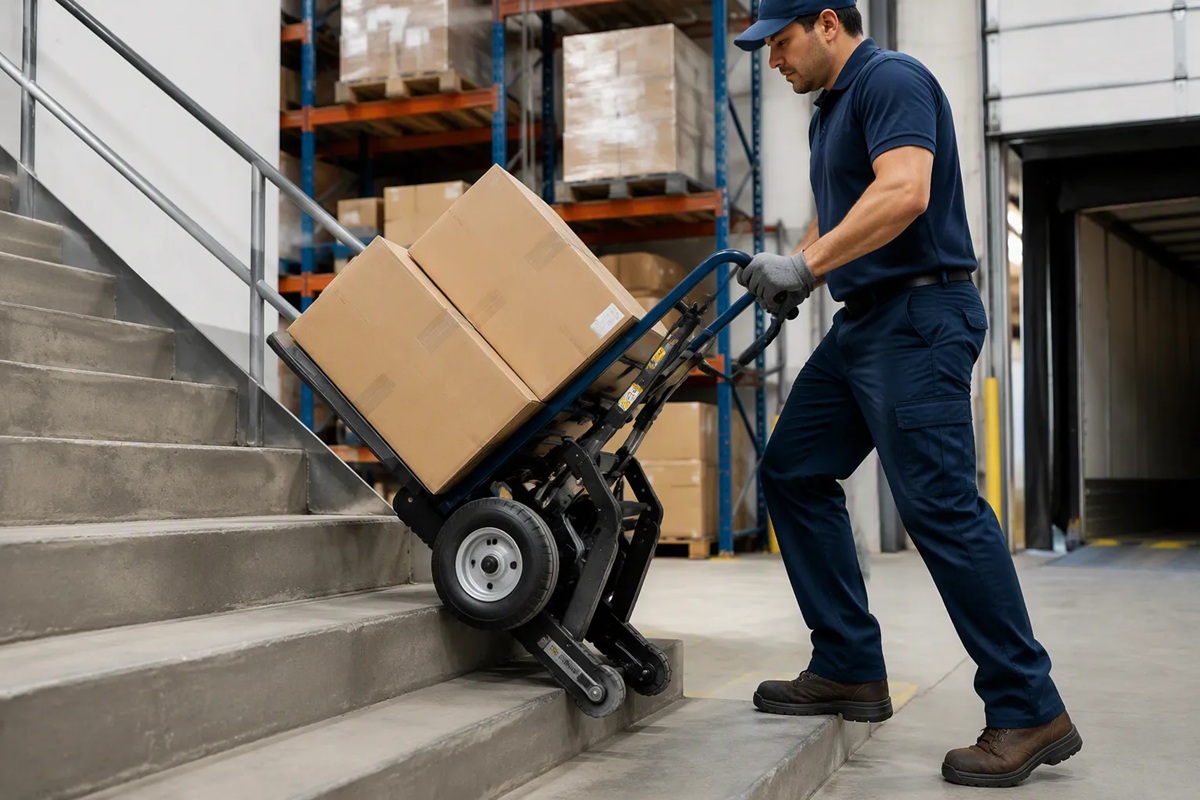
You can maximize your logistics efficiency by equipping your team with stair-climbing heavy-duty hand trolleys. These tools reduce manual labor, prevent injuries, and speed up stair navigation. They eliminate the need for multiple workers or repeated trips when moving heavy loads up and down stairs. Faster stair navigation means quicker deliveries, fewer delays, and higher customer satisfaction. Reduced physical strain lowers injury rates, workers' compensation claims, and costly downtime. The result is a direct improvement in productivity, safety, and profitability.
Stair-climbing hand trolleys speed up deliveries by up to 50% on stairs.
They reduce workplace injuries and lower costs from workers' compensation and downtime.
One worker can handle heavy loads alone, cutting labor needs and boosting ROI.
Heavy-duty Hand Trolleys deliver measurable gains across every stage of your delivery operation. You gain speed on stairs, you reduce workplace injuries, and you lower your labor costs. Each benefit compounds the others. Together, they transform your logistics performance from acceptable to exceptional.
Time is the most valuable resource in logistics. Every minute you save on a delivery route adds up to significant gains by the end of the day. Stair-climbing hand trucks give you a direct advantage here. Your workers move loads up and down stairs without stopping to reposition the load or call for help.
The numbers tell a compelling story. Consider the difference in job completion time between traditional methods and modern stair-climbing equipment.
According to a stair-climbing trolley manufacturer, a delivery worker using an electric handcart can transport large boxes alone in roughly half the time required by manual carrying methods. This implies a time saving of about 50% per delivery. You cut your delivery windows in half when your team uses the right equipment.
These time savings ripple through your entire operation. You improve several key efficiency metrics when you equip your team with heavy-duty hand trolleys:
Order processing times
Employee productivity
Faster turnaround times
Improved overall efficiency
Your drivers complete more stops per shift. Your warehouse teams move inventory faster. Your customers receive their goods sooner. Each of these improvements strengthens your competitive position in the market.
Manual material handling is the leading cause of workplace injuries in logistics. Your workers lift, twist, and carry heavy loads on stairs every day. These repetitive movements create strain on backs, knees, and shoulders. One wrong step can lead to a serious injury that sidelines a valuable employee for weeks or months. Stair-climbing heavy-duty hand trolleys, such as a versatile Climbing Stairs Foldable Truck, remove the physical burden from your workers. The trolley carries the weight. Your worker guides the load with minimal effort. This simple change dramatically reduces the risk of musculoskeletal injuries.
Lost productivity from injured workers
Overtime pay for employees covering absent colleagues
Training costs for replacement workers
Administrative time managing injury claims
Potential increases in insurance premiums
A safer workplace also improves morale. Your workers feel valued when you provide them with proper equipment. They worry less about getting hurt on the job. This peace of mind translates into better focus, higher job satisfaction, and lower turnover rates. You build a more stable, experienced workforce over time.
Labor represents one of your largest operational expenses. Every additional worker on a delivery team increases your payroll costs, benefits expenses, and management overhead. Stair-climbing heavy-duty hand trolleys allow you to accomplish more with fewer people.
Consider a typical two-person delivery team. One worker drives while the other helps carry heavy items up stairs. With a stair-climbing trolley, a single worker can handle most deliveries alone. You redirect the second worker to another route or another task. Your productivity per labor hour increases immediately.
This efficiency gain delivers a strong return on investment. Calculate the cost of a single employee's salary, benefits, and overhead for one year. Compare that figure to the purchase price of a quality stair-climbing trolley. Most logistics companies recover their equipment investment within a few months through reduced labor costs alone.
The ROI extends beyond direct labor savings. Faster deliveries mean you can serve more customers with the same fleet. You reduce overtime hours because routes finish on schedule. You lower vehicle wear and tear because trucks spend less time idling at delivery stops. Each of these factors adds to your bottom line.
You also gain flexibility in how you deploy your workforce. During peak seasons, you can increase delivery volume without hiring temporary staff. Your existing team handles the additional workload with the same equipment. This scalability gives you a competitive advantage when demand surges.
Selecting the right equipment determines your long-term success. A cheap trolley that fails under load costs you far more than a quality unit that performs for years. You need to evaluate three critical features before you make a purchase decision. These features directly impact your operational efficiency, your workers' safety, and your return on investment.
Load capacity is the first specification you should examine. This number tells you the maximum weight the trolley can safely transport. Choose a model with a capacity that exceeds your heaviest regular load. A trolley rated at exactly your maximum weight will fail prematurely. The dynamic forces from starting, stopping, and bumps on stairs add stress that static weight ratings do not capture.
Industry experts recommend selecting a hand truck rated at least 20 to 25 percent above the heaviest load you move regularly. This safety margin absorbs the extra forces your equipment encounters during real-world use. Using a 500-pound-rated truck for a 1,000-pound item risks equipment failure, damaged goods, and worker injury. For very heavy items, consider capacities of 1,000 pounds or more.
The load capacity you need depends on your specific logistics operation. Heavy-duty dollies have a load capacity of 400 KG, which handles most industrial delivery requirements. A capacity of 600 to 900 pounds is common for heavy duty stair climbing carts, suitable for most logistics needs including appliances and equipment.
Different trolley designs offer different capacity ranges. Review this comparison to understand your options.
Follow a systematic approach to determine your capacity requirements. First, audit the heaviest item you routinely move. Identify the absolute maximum weight your team handles in a standard month. Second, add a strict 20 percent safety margin. Multiply that maximum weight by 1.2 and use this as your minimum target capacity. Third, define your primary floor surface. Document whether your operations occur on smooth concrete, rough gravel, or carpeted stairs. Fourth, select fixed versus folding models based on your realistic storage space and required daily usage frequency.
The stair-climbing mechanism separates ordinary hand trucks from true heavy-duty hand trolleys. This feature determines how smoothly your workers navigate stairs with heavy loads. A poor mechanism creates jolting movements, requires excessive force, and increases injury risk. A quality mechanism transforms stair navigation into a controlled, efficient process.
Most stair-climbing trolleys use a tri-star wheel cluster design. Three wheels mount on a rotating central hub. Pulling backward against a stair rotates the cluster upward. This action smoothly traverses the step edge without dragging the rigid axle. The design prevents the violent jolting and axle dragging that traditional wheels experience on stair risers. You should assess cluster clearance when evaluating these units. Adequate clearance ensures the mechanism engages each step properly without catching or slipping.
For loads exceeding 200 pounds on steep stairs, a motorized climbing unit is recommended for maximum operator safety and to prevent shoulder strain. Motorized units do the heavy lifting for your workers. Your team guides the load while the motor handles the climbing force. This feature proves especially valuable for delivery routes with multiple flights of stairs or heavy appliances.
Wheel type also affects stair-climbing performance and overall efficiency. Each wheel material offers distinct advantages for different environments.
Durable polyurethane or rubber wheels provide smoother glide and reduced noise during operation. Larger wheels offer better traction on uneven surfaces. Swivel front wheels enhance maneuverability in tight warehouse spaces. Match your wheel selection to your primary operating environment for best results.
Construction quality determines how long your investment lasts. A well-built trolley withstands years of daily use in demanding logistics environments. A poorly constructed unit fails within months and creates safety hazards for your workers. You should evaluate frame material, weld quality, and surface treatment before purchasing.
Steel and aluminum represent the two primary frame materials for heavy-duty hand trolleys. Each material offers distinct advantages and trade-offs.
Steel offers maximum strength for heavy loads. Aluminum is lighter and rust-resistant, which improves maneuverability and reduces operator fatigue during repeated logistics tasks. Your choice depends on your specific priorities. Operations with extreme weight requirements benefit from steel construction. Operations with frequent loading and unloading across long distances benefit from aluminum.
Beyond frame material, examine these construction details. Weight capacity should exceed your maximum expected load. Industrial models often handle over 1,000 pounds, which directly impacts how much cargo you can move per trip and thus your logistics throughput. Handle design and height matter for operator comfort. Ergonomically designed, adjustable, and cushioned handles reduce strain and fatigue during extended use, improving operator productivity and safety. Platform size and surface affect load security. Larger platforms allow transport of more or bulkier items. Non-slip or textured surfaces prevent load shifting during transit, ensuring safer and more efficient handling.
Safety features complete the durability picture. Brakes or locking wheels prevent unintended movement during loading and unloading. Safety guards or caged sides secure loads, reducing accidents and downtime in logistics operations. A folding mechanism enables compact storage in space-limited warehouses, improving operational flexibility and workspace organization.
Proper implementation transforms a quality investment—such as an Economical Plastic Folding Platform Hand Trolley 500kg—into a measurable productivity driver. You need to train your team, maintain your equipment, and plan your routes. Each strategy reinforces the others.
Training directly reduces accidents and extends equipment life. Your workers must understand safe loading, climbing, and unloading procedures. Follow these steps to operate your stair-climbing cart correctly:
Assess the load’s weight, dimensions, and fragility to select the appropriate cart.
Clear the path and stairs of obstacles, debris, and hazards like loose steps or wet surfaces.
Load the cart by placing heavier items at the bottom and lighter items on top. Secure the load with straps or bungee cords.
Ascend stairs by tilting the cart back slightly and rolling it up one step at a time at a steady pace.
Descend stairs by leaning the cart forward slightly and allowing the wheels to roll down slowly while maintaining control.
Unload by removing lighter items first, then heavier items, keeping the cart stable throughout.
Inspect the load for damage after unloading, especially fragile items.
Your supervisors should monitor compliance and intervene when unsafe practices occur. Provide periodic refresher training to reinforce these skills. New staff and those returning after long absences must undergo training before resuming work. This commitment to safety protects your workers and your investment in Heavy-Duty Hand Trolleys.
Regular maintenance prevents breakdowns that delay deliveries. Follow these best practices to keep your trolleys in peak condition.
A clean, well-maintained trolley performs better and lasts longer. Wipe down the wheels and frame after each use.
Route planning maximizes the time savings your trolleys deliver. Group deliveries that require stair climbing into concentrated geographic zones. Assign these routes to workers trained on stair-climbing equipment. Avoid mixing stair-heavy routes with ground-level deliveries whenever possible. This planning reduces fatigue and keeps your team moving efficiently.
Stair-climbing heavy-duty hand trolleys solve your biggest logistics problems: slow stair navigation, manual handling injuries, and high labor costs. Choose the right load capacity, climbing mechanism, and durability for long-term performance. Train your team, maintain equipment, and plan routes to turn these Heavy-Duty Hand Trolleys into a measurable ROI driver. You gain faster deliveries, safer workers, and lower operating costs.
Choose a capacity at least 20 percent above your heaviest regular load. This margin absorbs dynamic forces on stairs. Most logistics operations need 600 to 1,000 pounds.
Inspect your equipment before each shift. Check wheels, hinges, and the climbing mechanism for wear. Lubricate moving parts weekly. Replace damaged components immediately to prevent downtime.
Yes. A single worker can move heavy loads up stairs with a quality stair-climbing trolley. This capability reduces labor requirements and boosts your return on investment.