

Categories
Latest blog
What Are The Exact Advantages Of Stainless Steel Heavy-Duty Hand Trolleys In Corrosive Industrial Environments?
Sep 20 , 2026What Are The Exact Advantages Of Stainless Steel Heavy-Duty Hand Trolleys In Corrosive Industrial Environments?
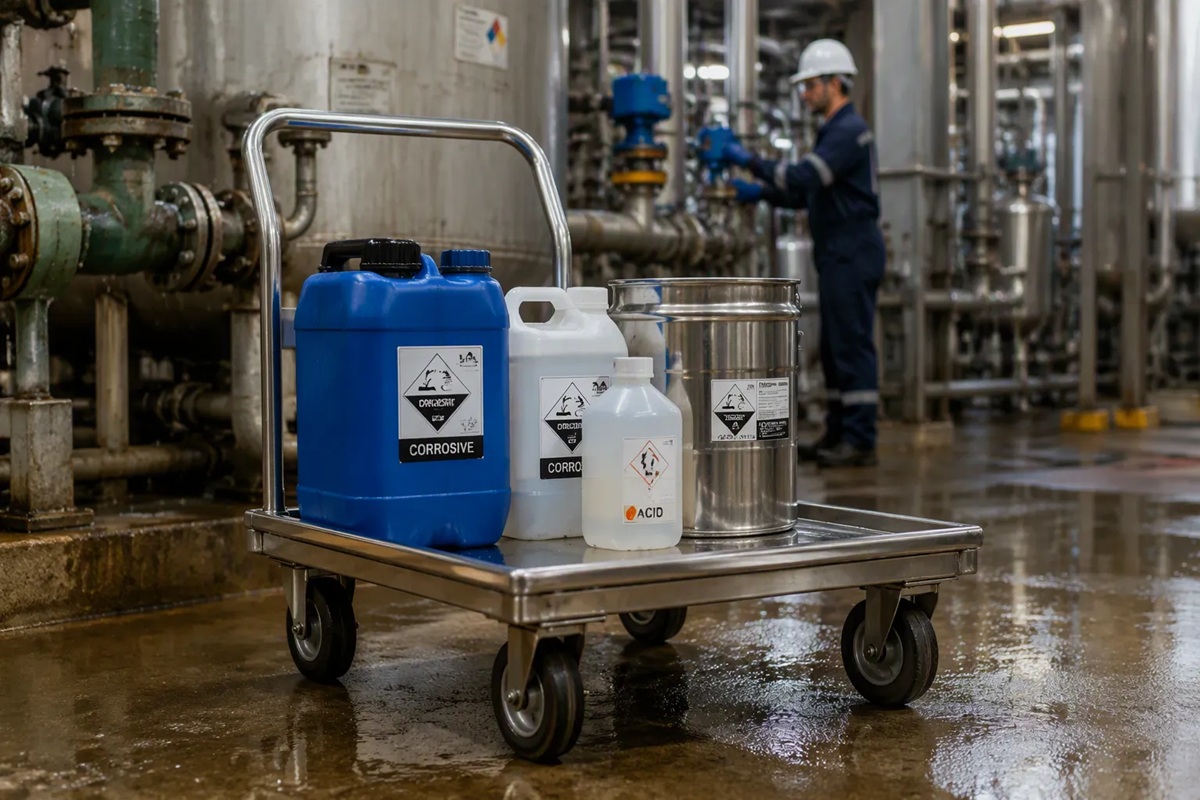
Stainless steel heavy-duty hand trolleys resist rust, chemicals, moisture, and salt better than carbon steel or aluminum. They last longer, reducing downtime. They need minimal maintenance, lowering costs. They offer superior load capacity—200 kg, 400 kg, or 800 kg—and structural integrity. You get non-sparking surfaces and ergonomic handling. They meet hygiene standards for food, chemical, and pharmaceutical facilities.
Stainless Steel Hand Trucks: Ideal for food service, pharmaceutical, or cleanroom environments where hygiene and corrosion resistance are critical.
Stainless steel trolleys resist rust, chemicals, and salt, so they last 10 to 20 years in harsh environments.
They save you money over time because you replace them less often and spend less on maintenance and cleaning.
They keep your workers safe with non-sparking and ergonomic designs, and they meet strict hygiene standards for food and pharma.
Corrosion attacks every metal surface in an industrial setting. You face chemical splashes, high humidity, salt spray, and constant washdowns. While a 3 Layer 300Kg Hotel Room Service Silent Plastic Platform Trolley serves as an excellent rust-proof and quiet solution for indoor hospitality needs, industrial environments demand much tougher equipment. Stainless steel heavy-duty hand trolleys stand up to these extreme threats far better than other materials. This section explains exactly why stainless steel wins the corrosion battle.
Stainless steel contains chromium. This element forms a passive oxide layer on the metal surface. The layer acts as a shield. It blocks oxygen and moisture from reaching the underlying steel. When you scratch the surface, the layer repairs itself instantly. This self-healing property keeps your equipment protected around the clock.
Chemical plants expose equipment to acids, bases, and solvents. Carbon steel rusts quickly in this environment. Aluminum corrodes when it contacts strong alkaline solutions. Stainless steel resists a wide range of aggressive chemicals. You can move drums of hydrochloric acid or sodium hydroxide without worrying about the trolley frame.
Moisture is everywhere in food processing plants and washdown areas. Water alone does not harm stainless steel. The passive layer remains intact even after repeated exposure. You can hose down your trolley at the end of every shift. The metal dries without a single rust spot.
Salt is another major threat. Coastal facilities and winter road salt create a brutal environment for metal equipment. Salt accelerates corrosion in carbon steel and aluminum. Stainless steel grades like 304 and 316 handle salt exposure with ease. The chromium oxide layer prevents chloride ions from attacking the metal. Your heavy-duty hand trolleys stay strong in seaside warehouses and cold storage facilities.
Carbon steel is strong and affordable. It rusts fast in corrosive environments. You need constant painting, coating, or oiling to protect it. Even with care, rust appears within months. The rust weakens the structure. Eventually, you must replace the entire trolley.
Aluminum resists rust naturally. It forms its own oxide layer. This layer protects against water and air. However, aluminum performs poorly against acids and alkalis. It also scratches easily. Deep scratches expose fresh metal to corrosion. Aluminum is lightweight, but it sacrifices durability in harsh chemical settings.
Stainless steel combines the best properties of both materials. It offers the strength of carbon steel and the rust resistance of aluminum. It also adds superior chemical resistance. You get a material that lasts for years in the toughest conditions.
The following table shows how each material behaves at high temperatures. This matters for industrial washdowns and heat-intensive processes.
| Material | High-Temperature Behavior | Temperature Threshold |
|---|---|---|
| Aluminum Alloys | Begin softening | Above 150–200°C |
| Stainless Steel | Durability advantage over aluminum becomes decisive for surviving elevated operating temperatures | Above 150°C |
Aluminum loses mechanical strength rapidly above 200°C (392°F). The structure sags or deforms under load. Stainless steel maintains its strength at elevated temperatures. Its high melting point and strength retention are non-negotiable for safety and structural longevity in high-heat zones. You can trust stainless steel heavy-duty hand trolleys in bakeries, foundries, and other hot environments.
Temperature swings test every material. A trolley might move from a freezer at -20°C to a washdown bay at 80°C. Thermal expansion and contraction stress the metal. Carbon steel cracks under this cycle. Aluminum warps and fatigues. Stainless steel handles rapid temperature changes without structural damage.
Humidity is a constant enemy in tropical and coastal regions. Relative humidity above 80% accelerates rust on carbon steel. Stainless steel remains unaffected. The passive layer stays stable. You never see red rust or pitting on the surface.
Condensation forms when you move equipment between hot and cold zones. This moisture sits on the metal surface. Carbon steel rusts overnight. Stainless steel sheds the water without any reaction. You save time on drying and inspection.
Steam cleaning is common in pharmaceutical and food facilities. High-pressure steam at 120°C or higher blasts the trolley surface. Stainless steel withstands this treatment daily. Aluminum softens and loses shape. Carbon steel rusts immediately after the steam cools.
Salt fog testing proves the point. Manufacturers expose metals to a salt spray chamber for hundreds of hours. Carbon steel shows rust within 24 hours. Aluminum shows pitting after 100 hours. Stainless steel grade 316 shows no corrosion after 1,000 hours. This test mirrors real-world coastal and marine conditions.
You invest in equipment for the long haul. Stainless steel heavy-duty hand trolleys deliver decades of service in conditions that destroy other materials. The corrosion resistance is not a minor advantage. It is the foundation of reliable performance in any corrosive industrial environment.
A trolley is only as good as its ability to survive daily punishment. While a standard 2 layers Dinning Hotel Room Service Trolley easily handles the daily operations of hospitality, stainless steel heavy-duty hand trolleys deliver exceptional durability in the most demanding industrial settings. This durability translates directly into cost savings. You spend less on replacements, repairs, and labor. This section breaks down exactly how stainless steel construction pays for itself many times over.
Load capacity is the first specification you check when selecting a trolley. Stainless steel offers superior strength compared to aluminum and matches carbon steel in raw load-bearing ability. You can choose from standard capacities of 200 kg, 400 kg, or 800 kg. Each capacity rating reflects the actual weight the trolley can safely transport without deformation or failure.
The structural integrity of stainless steel comes from its metallurgical composition. Chromium, nickel, and molybdenum create a dense, tough alloy. This alloy resists bending, twisting, and fatigue. Carbon steel may match stainless steel in initial strength. However, carbon steel loses strength as rust eats into the frame. A rusted carbon steel trolley might fail suddenly under a heavy load. Stainless steel maintains its full strength year after year.
Welded joints are critical stress points on any trolley. Stainless steel welds form strong, clean bonds. The weld area retains corrosion resistance because the chromium content remains consistent throughout the metal. Carbon steel welds often become the first point of rust. The heat from welding damages protective coatings. Stainless steel requires no coating. The weld itself is as corrosion-resistant as the base metal.
You face dynamic loads in real-world use. A trolley does not just hold a static weight. It rolls over uneven floors, bumps into door frames, and stops suddenly. These actions create impact forces far greater than the static load. Stainless steel absorbs this impact energy without cracking. The material flexes slightly under stress and returns to its original shape. Aluminum tends to dent permanently under the same conditions. Carbon steel may fracture at rust-weakened points.
The frame design of a stainless steel heavy-duty hand trolley adds another layer of strength. Reinforced cross-bracing distributes weight evenly across the structure. Thick gauge tubing prevents buckling under compression. Solid axles and heavy-duty casters handle the weight without binding. Every component works together to support the rated load safely.
Replacement frequency is the hidden cost that destroys maintenance budgets. A cheap carbon steel trolley might cost less upfront. However, you may replace it every 12 to 18 months in a corrosive environment. Stainless steel heavy-duty hand trolleys last 10 to 20 years or more with proper use. This difference transforms your long-term cost structure.
Consider the total cost of ownership over a 10-year period. You purchase five carbon steel trolleys at $200 each. Your total spend reaches $1,000. You also pay for disposal fees, administrative time, and downtime during each replacement. A single stainless steel trolley costs $600 upfront. It lasts the entire 10 years. Your total spend is $600. You save $400 in direct purchase costs alone. The savings grow much larger when you factor in labor and downtime.
Downtime carries a heavy price in industrial operations. A failed trolley stops your workflow. Workers stand idle while someone searches for a replacement. Production targets slip. You may need to rent temporary equipment at premium rates. Stainless steel eliminates these disruptions. Your equipment remains ready every single day.
Inventory management becomes simpler with stainless steel. You do not need to stock multiple spare trolleys. You do not need to track warranty claims or schedule frequent replacements. One durable fleet serves your needs for years. This simplicity reduces administrative burden and frees your team for more valuable tasks.
The resale or scrap value of stainless steel adds another financial benefit. Stainless steel retains significant scrap value even after decades of service. Carbon steel rusts away to almost nothing. Aluminum has lower scrap value than stainless steel. Your investment retains residual value throughout its entire lifecycle.
Maintenance labor is expensive. Every hour your team spends painting, oiling, or repairing a trolley is an hour not spent on production. Stainless steel heavy-duty hand trolleys require almost no routine maintenance. This fact alone saves thousands of dollars in labor costs over the equipment's lifespan.
Carbon steel demands constant attention. You must inspect the surface for rust every week. You must sand and repaint damaged areas immediately. You must apply oil or grease to protect exposed metal. These tasks consume supplies, labor hours, and management attention. Stainless steel needs none of this. The passive oxide layer protects the metal automatically. You inspect the trolley visually for damage. You clean it when dirty. That is the entire maintenance routine.
Cleaning costs drop dramatically with stainless steel. Food processing plants, pharmaceutical facilities, and chemical laboratories require frequent washdowns. Carbon steel cannot survive repeated exposure to water and cleaning chemicals. You must dry it immediately after every wash. You must reapply protective coatings after each cleaning. Stainless steel tolerates water, steam, and cleaning agents without any special treatment. You wash the trolley and let it air dry. No rust forms. No protective layer needs replacement.
Cleaning chemicals themselves can damage equipment. Chlorinated cleaners, acid-based sanitizers, and caustic degreasers attack carbon steel and aluminum. Stainless steel grade 316 resists these chemicals exceptionally well. You can use the same aggressive cleaning protocols on your trolleys that you use on your other stainless steel equipment. This consistency simplifies your cleaning procedures and reduces training requirements.
The smooth surface of stainless steel also makes cleaning faster. Rough, rusted, or painted surfaces trap dirt and bacteria. You must scrub hard to remove contaminants. Stainless steel has a non-porous, smooth finish. Dirt and debris wipe away easily. This speed matters in facilities that clean equipment multiple times per day.
Labor savings compound over time. Suppose you spend two hours per month maintaining a carbon steel trolley. That equals 24 hours per year. At a labor rate of $25 per hour, you spend $600 annually on maintenance. A stainless steel trolley requires perhaps 15 minutes per month. That equals three hours per year. Your annual labor cost drops to $75. You save $525 per trolley every year. Across a fleet of ten trolleys, you save $5,250 annually. These savings continue for the entire life of the equipment.
The durability and cost-effectiveness of stainless steel heavy-duty hand trolleys create a clear financial advantage. You pay less over time. You experience fewer disruptions. You free your team from tedious maintenance tasks. These benefits make stainless steel the smart choice for any corrosive industrial environment.
Safety and hygiene go hand in hand when you work in corrosive industrial settings. Stainless steel heavy-duty hand trolleys deliver features that protect both your workers and your products.
You face explosion risks in areas with flammable gases or dust. Heavy-duty hand trolleys made from stainless steel carry spark-resistant ratings that meet strict safety standards. They qualify as Ex II 2G c IIB T4 for gas and Ex II 2D c 135°C for dust. This certification complies with the ATEX Directive 2014/34/EU. Your equipment can operate safely in Zone 1 & 2 gas environments and Zone 21 & 22 dust hazardous areas. The anti-static construction prevents static charge buildup. You avoid sparks that could ignite volatile substances.
Your workers handle heavy loads daily. Stainless steel trolleys feature ergonomic handles that reduce strain on wrists and shoulders. The handle height suits a natural grip. Smooth-rolling casters require less pushing force. Your team can maneuver loads without excessive effort. The non-slip surface stays secure even when wet. You reduce the risk of slips and dropped loads.
Hygiene regulations demand clean and non-reactive equipment. Stainless steel meets FDA and GMP standards for food contact. The non-porous surface does not harbor bacteria. You can use aggressive sanitizers without damaging the trolley. Your facility passes inspections with ease. The smooth finish resists contamination and simplifies cleaning. You maintain compliance without special coatings or linings.
Stainless steel heavy-duty hand trolleys deliver unmatched corrosion resistance. They extend equipment life in chemical, salt, and moisture-rich settings. You gain significant long-term savings through durability and low maintenance. Safety and hygiene features protect your workers and meet strict industry regulations. Choose stainless steel heavy-duty hand trolleys as a direct, practical solution for corrosive industrial environments.
You get 10 to 20 years of service. Carbon steel models often fail within 18 months under the same conditions.
Yes. Stainless steel meets FDA and GMP standards. The non-porous surface resists bacteria growth. You clean it easily with aggressive sanitizers.
No. You inspect them visually and clean them when dirty. The passive oxide layer protects the metal automatically without coatings or oils.