
Why Are They Called Casters? Origin, History & Basic Types
May 29 , 2026
We all see casters every day—on office chairs, hospital beds, shopping carts, and industrial trolleys. They make moving heavy furniture and equipment effortless. But have you ever wondered where the name “caster” comes from? Let’s explore its origin, history, and basic types in simple terms.
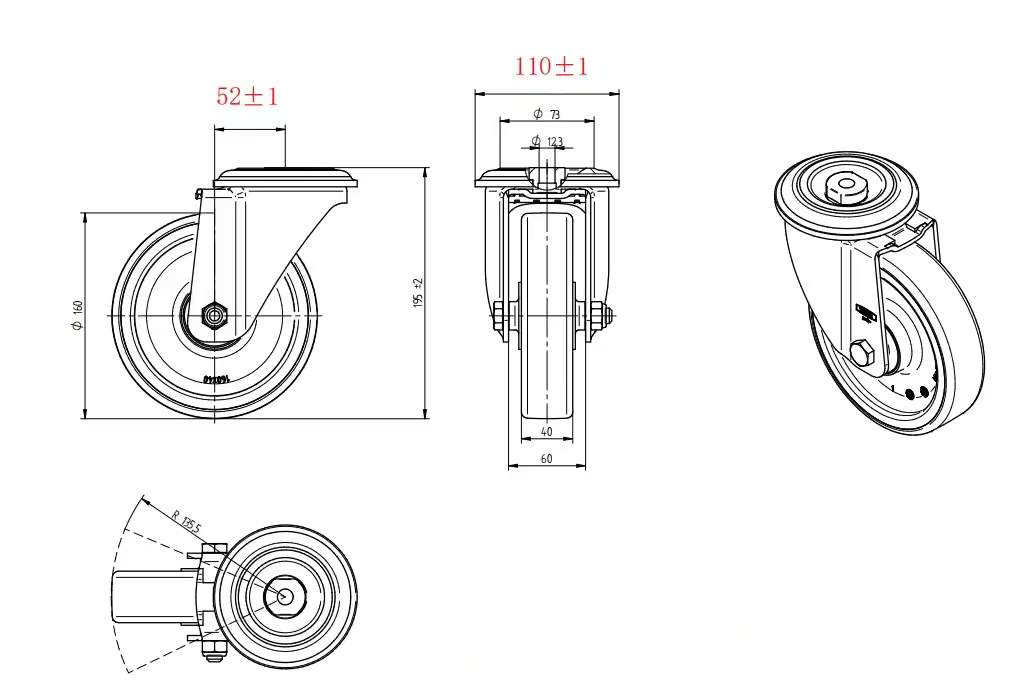
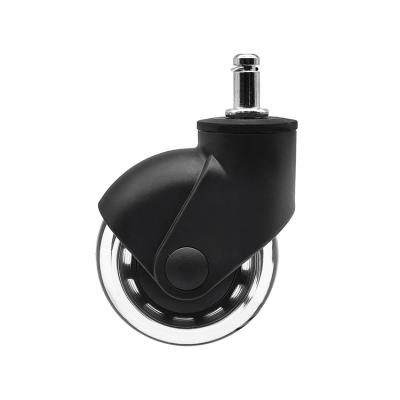
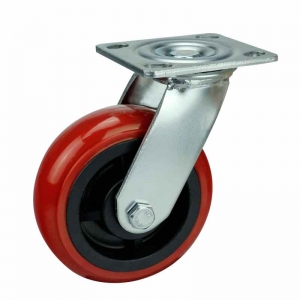
A caster is a complete wheel assembly mounted under objects for easy rolling and directional movement. More than just a single wheel, it includes a bracket, bearing, and swivel structure. It saves labor, protects floors, and brings flexible mobility to both daily and industrial scenes.
The word caster derives from the Old English root casten, which means to turn, throw, or rotate.
The name perfectly describes its core feature: a swivel caster can “cast” and pivot freely in any direction, letting the object turn and move without lifting. By the 17th century, people officially used “caster” to refer to these rotating wheel units, and the name has been widely used ever since.
Casters have existed for centuries. Before their invention, people had to drag or lift heavy items, which damaged floors and wasted strength.
Later, the wheel and swivel mechanism were combined into the first caster. During the Industrial Revolution, factories and warehouses needed efficient material handling, pushing caster technology to develop rapidly—stronger load capacity, more durable structure, and smoother rotation.
Today, casters have become an essential part of manufacturing, medical care, retail logistics, and furniture.
Supports 360° free rotation, perfect for narrow spaces and flexible direction changes. Widely used on office chairs, medical beds, and shopping carts.
Fixed bracket design, only moves straight forward and backward. Higher stability and strength, ideal for assembly lines and heavy industrial carts.
Casters are also available in rubber, polyurethane, nylon, and metal materials, matching different floor conditions and load demands.
The name “caster” is not random; it comes from its natural ability to turn and move freely. After centuries of evolution, modern casters deliver better durability, quieter rolling, and stronger load performance, bringing convenient mobility to every industry.