
Understanding Caster Wheel Materials: How to Choose the Best Option for Your Application
Nov 20 , 2025Selecting the right caster wheel material is a key factor in ensuring smooth mobility, long-term durability, and safe operation of your equipment. Whether you’re moving light-duty carts or transporting heavy industrial loads, the material of the wheel directly determines how well it performs on different surfaces and under specific environmental conditions.
In this guide, we compare the most commonly used caster wheel materials — rubber, polyurethane, nylon, steel, and several specialized compounds — so you can make an informed choice based on your application needs.
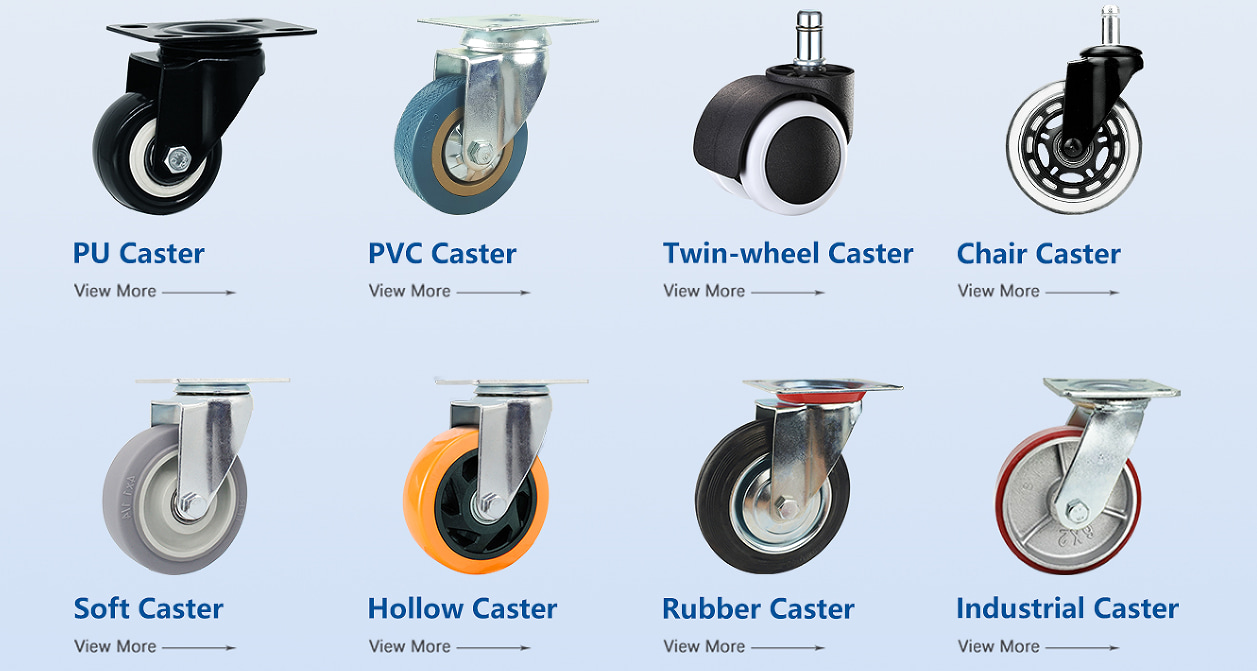
Rubber wheels are known for their soft, cushioned performance. They deliver excellent traction and roll quietly, making them ideal for spaces where comfort and noise control matter, such as retail stores, hospitals, and living areas.
Because rubber is a relatively soft compound, it wears faster on abrasive floors and is not suitable for carrying very heavy loads. Prolonged static pressure may also leave flat spots, affecting mobility when the cart is used again.
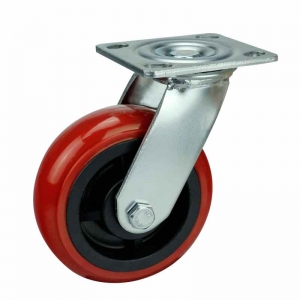
Polyurethane (PU) wheels strike a balance between strength and floor protection. They support heavier loads than rubber while still offering noise reduction and non-marking performance. PU wheels resist oils, chemicals, and abrasion, which makes them a preferred option for warehouses, factories, and logistics operations.
Polyurethane wheels typically cost more than rubber ones. If a heavy cart sits idle for long periods, PU wheels may develop slight indentations — although this is far less common than with rubber.
Nylon wheels are lightweight yet surprisingly strong. Their low rolling resistance allows users to move equipment with less effort. Additionally, they are highly resistant to chemicals, moisture, and corrosion, making them suitable for cold storage, food processing, and industrial facilities.
Because nylon is a hard material, it can damage delicate flooring and generate more noise. For environments requiring quiet operation or floor protection, a softer wheel material may be preferable.
Steel wheels are the top choice for extremely heavy-duty applications. They handle maximum loads, tolerate harsh chemicals, and withstand high temperatures. They excel in environments such as foundries, metal processing plants, and high-heat manufacturing zones.
Steel wheels are noisy and can severely damage floors if no protective measures are taken. Their weight also makes handling more demanding.
Designed for running on inverted angle iron tracks
Deliver precise alignment and exceptional load capacity
Best for guided movement systems in industrial settings
Made from resin reinforced with fabric fibers
Hard, strong, and resistant to oils, solvents, and moisture
Suitable for heavy-duty indoor industrial use
Air-filled design provides excellent shock absorption
Perfect for rough terrain and outdoor applications
Require periodic air pressure checks
Every wheel material has a defined load capacity. Selecting a wheel that cannot support the required weight leads to faster wear and potential equipment failure.
Soft materials like rubber and polyurethane are safe for sensitive floors. Hard materials like nylon or steel should only be used on robust surfaces or with protective flooring.
Environments such as offices, clinics, or residential areas may require low-noise materials like rubber or polyurethane.
Industrial settings involving oils, cleaning agents, or high temperatures often require materials like nylon, steel, or specialized composites.
No single caster wheel material is perfect for every situation. Each type offers unique strengths tailored to specific environments and load demands. Understanding the characteristics of rubber, polyurethane, nylon, steel, and specialty wheels will help you select the most effective option for your equipment.
Choosing the right material ultimately improves mobility, protects your floors, and increases the overall lifespan of your casters — ensuring smoother, safer, and more reliable operations.