
Categories
Latest blog
How to Choose the Right Platform Trolley for Your Warehouse?
Nov 16 , 2026For warehouse buyers, the key is not simply choosing the trolley with the highest stated capacity. It is selecting a practical combination of platform material, frame construction, wheel configuration, and dimensions. Guangzhou YLcaster Metal Co., Ltd. offers platform trolleys and hand trolleys in a range of configurations, with listed hand trolley capacities generally spanning 70 kg to 600 kg and customization available for different requirements.

Load capacity should be the first specification you confirm. Estimate the maximum weight that will be carried in normal operation, including the goods, packaging, containers, and any fixtures placed on the platform. Do not select a trolley based only on the average load if heavier loads are likely to occur during peak periods.
It is also important to distinguish between payload and total moving weight. The rated payload usually refers to the maximum load the trolley is designed to carry, while the trolley itself adds weight to the overall moving mass. Buyers should confirm how the supplier defines its capacity rating and whether the rating applies to the complete trolley under specified test conditions.
YLcaster lists several practical capacity options. Its High Quality Plastic Foldable Hand Trolley, item number W019XXXPP, is listed in 150 kg, 300 kg, and 500 kg capacity options. The product page specifies a PP and steel construction and a wheel arrangement of two rigid and two swivel casters. This range gives purchasing teams a starting point for comparing lighter warehouse transfers with heavier material-handling tasks.
For a more demanding application, YLcaster also lists the Economical Plastic Folding Platform Hand Trolley 500kg, item number W019EXXXPP. Its stated load capacity is 500 kg, with two rigid and two swivel wheels. Always confirm the exact configuration and rated capacity for the model and quantity being quoted.
A trolley platform should support the load without creating an unstable overhang. Before ordering, measure the largest cartons, bins, components, or containers that will be transported. Consider not only the platform length and width, but also whether goods need to be secured during movement and whether operators must load or unload from the sides.
Platform material affects weight, durability, cleaning, and suitability for the working environment. A PP plastic platform combined with a steel structure can be a practical option for general warehouse movement. Metal platforms may be preferred where the application calls for a more rigid working surface. In areas where goods need additional containment, a mesh-sided trolley can help keep items within the cart during transport.
For example, the YLcaster 300KG Steel Mesh Tool Trolley, item number W019XXXMC, has a stated load capacity of 300 kg and a two-rigid, two-swivel wheel configuration. Its steel-and-blue product specification makes it a relevant option to assess when moving tools, parts, or grouped materials that benefit from a mesh-sided structure.

For buyers comparing different constructions, YLcaster also lists a stainless steel foldable trolley in 150 kg, 300 kg, and 500 kg capacity options. Material selection should be based on the actual environment, including moisture, cleaning chemicals, temperature, and the type of goods being moved. If corrosion resistance or frequent washdown is important, ask the supplier to confirm the precise stainless steel grade and the suitability of the complete assembly, including its fasteners and casters.
Casters have a direct effect on how a platform trolley starts, turns, travels, and stops. A trolley may have a suitable load rating but still be difficult to use if its wheels are not matched to the floor and operating conditions.
YLcaster's W019XXXPP plastic foldable trolley is listed with two rigid and two swivel casters. In this common arrangement, the rigid wheels help the trolley track in a straight line, while the swivel wheels support turning and maneuvering. It can be suitable for many general material-transfer routes, but buyers should check aisle width and turning requirements before choosing a configuration.
Wheel material and diameter also matter. Warehouse floors may be smooth concrete, epoxy-coated, tiled, or interrupted by expansion joints and small thresholds. The right wheel should balance load rating, rolling resistance, noise, floor protection, and resistance to wear. For quieter indoor operation, YLcaster's product information also describes a silent platform trolley using 125 × 32 mm TPR wheels. Its caster specification lists a 120 kg caster capacity, while the trolley itself is stated to carry 300 kg. These are different ratings: the caster figure should not be mistaken for the complete trolley's payload.
When specifying casters, provide the supplier with the floor type, maximum load, expected travel distance, operating speed, and whether the trolley will cross joints or ramps. If the trolley will be parked on a slope or used near loading areas, ask whether wheel brakes or other parking controls are available and appropriate for the risk.
Think about how the trolley will be used throughout a typical shift. A compact foldable platform trolley can be useful where storage space is limited or where carts are not in continuous use. A heavier platform model may be more suitable for repeated movement of dense goods. A mesh-sided trolley can help contain loose tools or components, while a multi-layer trolley may be more practical when operators need to separate smaller items.
Route conditions are just as important as the load. Measure narrow aisles, doorways, lift entrances, workstations, and turning areas. Check the trolley's overall width and handle height, not only its platform dimensions. If operators frequently move between different warehouse zones, consider how easily the trolley can be steered and stored when not in use.
YLcaster's range includes platform trolleys, portable hand trolleys, and multi-layer trolleys. Buyers can compare these configurations through the YLcaster trolley product range and narrow the selection according to the goods, route, and handling process.
A low initial price does not always mean a lower cost over the trolley's service life. A poorly matched trolley may require more operator effort, more frequent wheel replacement, or additional maintenance. When comparing quotations, consider the purchase price alongside expected service life, spare-part availability, maintenance requirements, and the cost of downtime.
A simple purchasing comparison can use the following approach:
Total Ownership Cost = Purchase Cost + Maintenance Cost + Replacement Parts Cost + Downtime Cost
This is not a supplier quotation formula, but a useful way to compare options on a consistent basis. For high-frequency warehouse use, ask for details about caster replacement, spare-part supply, inspection requirements, and the availability of customized configurations. A trolley that is easier to maintain may offer better long-term value even if its initial price is higher.
To help a manufacturer recommend the right warehouse platform trolley, prepare a clear specification rather than requesting a quotation based only on a product photo. Include the maximum payload, platform dimensions, trolley material, wheel type, wheel diameter, floor conditions, expected daily usage, and required quantity. Also state whether you need a folding handle, mesh sides, multiple shelves, brakes, a particular color, or customized dimensions.
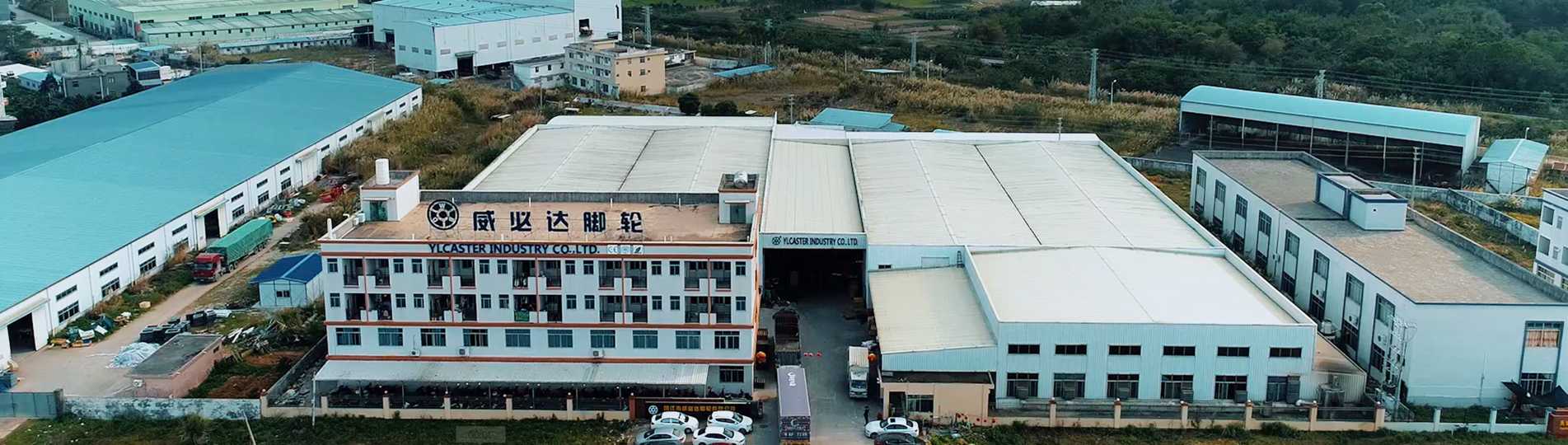
Guangzhou YLcaster Metal Co., Ltd. identifies itself as a caster and hand trolley manufacturer established in 1997. Its product range includes caster wheels and platform trolleys, with customization options for different applications. Providing complete operating details helps the YLcaster team assess which available model or configuration is appropriate for your warehouse rather than relying on capacity alone.
What load capacity should a warehouse platform trolley have?
Choose a capacity that covers your heaviest expected payload, not just the average load. Confirm the rated payload for the complete trolley and leave an appropriate operating margin based on the application and supplier guidance.
Is a plastic or metal platform trolley better for a warehouse?
Neither material is best for every warehouse. PP plastic platforms can suit general indoor handling, while metal constructions may be preferred for applications requiring a more rigid platform. Consider load type, environment, cleaning needs, and expected service life.
What is the advantage of two rigid and two swivel casters?
Two rigid casters help the trolley travel in a straighter line, while two swivel casters make turning easier. This arrangement is commonly used on platform trolleys, but the best layout depends on aisle width, route design, and operator handling requirements.
Are foldable platform trolleys suitable for warehouse use?
They can be suitable when the rated capacity and platform size match the application. A foldable handle can also reduce storage space when the trolley is not in use. Check the product's load rating and folding mechanism before purchase.
What is the difference between caster capacity and trolley capacity?
Caster capacity refers to the load rating of an individual wheel assembly under its specified conditions. Trolley capacity refers to the rated load of the complete trolley. These values are not interchangeable; ask the manufacturer to confirm the complete trolley's rated payload.
Can YLcaster provide customized warehouse platform trolleys?
YLcaster states that customized hand trolley options are available. Share your required dimensions, load capacity, materials, caster configuration, color, and order quantity to discuss a suitable configuration.
What information should I send when requesting a warehouse trolley quotation?
Provide the maximum load, platform dimensions, goods being transported, floor type, route conditions, daily usage frequency, preferred materials, caster requirements, and order quantity. Photos or a simple drawing of the working environment can also help clarify the application.
Choosing a warehouse platform trolley is ultimately about matching the equipment to the work. By checking load capacity, platform construction, caster performance, and the actual warehouse route, purchasing teams can make a more reliable decision. Explore YLcaster's trolley range and provide your application details to identify a configuration that fits your material-handling requirements.